Interra Systems – FAST Is Booming – But Quality Will Decide Who Wins the Next Phase of Streaming

Anupama Anantharaman, Vice President of Product Management, Interra Systems
Free Ad-Supported TV (FAST) has moved beyond niche status and is now reshaping the streaming landscape. Parks Associates recently reported that almost half (45%) of US internet households watch FAST services. This doesn’t mean paid subscription services are dwindling – the SVOD market is projected to reach 1.8 billion users by 2030, according to Statista.
By combining the familiarity of linear programming with the convenience of digital delivery, FAST channels have opened new doors for broadcasters, content owners, and streaming platforms. Viewers get scheduled programming without subscriptions, and providers gain access to scalable monetization models.
But with growth comes scrutiny. Audiences now expect the same reliability they associate with traditional broadcast: smooth playback, clean ad transitions, accurate captions and subtitling, and consistent audio across devices. To meet these expectations, providers need more than compelling content – they require a delivery infrastructure that can maintain quality at scale.
In a competitive environment where attention is fleeting and churn is high, quality has become a baseline expectation. Behind every stream is a complex chain of operational decisions, and monitoring plays a central role in this.
Monitoring Is the Backbone of FAST Success
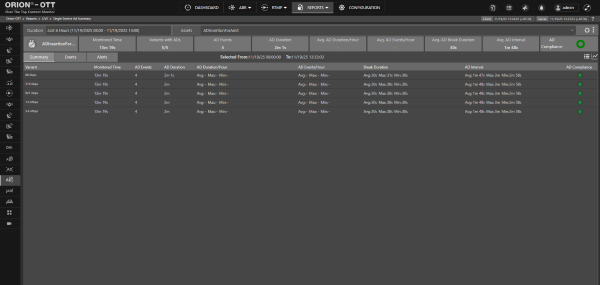
FAST platforms operate in a fragmented environment. Unlike single-origin OTT services, they often stitch together live feeds, archived VOD assets, third-party streams, and dynamically inserted ads. Each source may differ in codec, bitrate, and packaging format. Multiply that across hundreds of channels, and the operational complexity becomes clear.
Monitoring must begin at ingest, where encoding errors, format mismatches, or timing misalignments can be caught before they cascade downstream. But ad workflows present a different challenge — mistimed SCTE-35 markers or black frames between segments can directly impact monetization and viewer satisfaction. Adaptive bitrate (ABR) packaging introduces another layer of risk, requiring validation across renditions to ensure seamless switching and synchronization.
At the playback level, issues like buffering, audio-video sync errors, or frame freezes can quickly erode trust. Accessibility adds further pressure: captions must be accurate and timely to meet compliance standards and serve diverse audiences. And with FAST content delivered across connected TVs, mobile apps, browsers, and streaming sticks, performance must be monitored across all endpoints — not just in controlled environments, but in real-world conditions.
FAST may be free, but poor delivery comes at a cost. According to Conviva’s data, viewers with poor video experience watch 63% less content, and even small increases in poor experiences significantly impact viewer retention — every 1% increase in poor experience makes customers 1% less likely to return within a week. For ad-supported platforms, this translates directly into lost revenue, as consumers who experience poor digital experiences spend 42% less time on platforms when issues increase from 1% to 2%.
Where and How to Monitor
As platforms scale, the stakes grow — not just technically, but financially. Monitoring becomes a strategic lever for protecting revenue and reputation. To be effective, it must be layered across the entire workflow.
At the source, early detection of encoding and timing issues prevent downstream disruptions. At the origin and CDN level, validating packaging and segment integrity ensures content is delivered as intended. Playback monitoring on actual devices reveals how streams perform in real-world conditions, including ad transitions and user experience. And across all channels and regions, centralized visibility is essential. Operators need tools that allow them to oversee hundreds of channels simultaneously and drill down instantly when alerts are triggered.
The objective isn’t limited to simply identifying issues in the network. Effective monitoring provides context, which helps teams understand root causes and act decisively. This insight saves time and optimizes bandwidth usage. It also lowers operational costs while supporting smarter decisions around content delivery, ad strategy, and platform optimization. For example, identifying recurring caption sync issues on a specific device type can inform targeted fixes, while tracking QoE scores across regions can guide CDN routing strategies.
FAST platforms also face the challenge of scale. As channel counts grow and content libraries expand, manual oversight becomes impractical. Automation and AI-assisted monitoring are increasingly being adopted to flag anomalies, correlate errors, and prioritize alerts. However, automation is only as good as the architecture behind it. Without a unified view of ingest, origin, and playback, even the most sophisticated tools can miss critical context.
Beyond Viewer Experience: The Business Case for Quality
Quality affects more than just audience satisfaction and directly influences revenue, brand perception, and regulatory compliance. Poor ad transitions can result in missed impressions and under-delivery penalties. Inaccurate captions may trigger fines or legal challenges, especially in markets with strict accessibility mandates. Inconsistent playback is also an issue that can damage the credibility of broadcasters entering the FAST space with established reputations to protect.
Furthermore, as programmatic ad buying evolves, advertisers are raising the bar. Streaming platforms with higher QoE scores and verified delivery metrics are more likely to attract premium demand. In an environment like this, monitoring becomes a business enabler – one that supports both operational resilience and commercial growth.
FAST has proven its appeal with it growing number of users. The question now is whether platforms can sustain it. As competition intensifies, quality will determine who keeps viewers — and who loses them. Providers must move beyond reactive troubleshooting and embrace proactive, data-driven monitoring strategies that scale with their ambitions.