In this craft interview, Rick Bernier reflects on a career that has taken him to the very top of live broadcast audio. As a Senior Broadcast Audio A1 Engineer and Music Director, he has mixed some of the world’s most watched events – from the Winter Games to Football Night in America (FNIA).
What is your background and how did you get into broadcast sound?
Like many of my contemporaries, I started out in music. I studied Audio Engineering & Music Production at the Institute of Production & Recording in Minneapolis and interned at Magic Shop recording studio in Manhattan after graduation.I became the lead A1 for a mobile church in Greenwich, Connecticut, and started a for-hire live event production company. My career in broadcast began at ESPN as a studio tech where at first I learned to A2, manage comms, run camera (manned & robotic), video shading, and soon after started mixing as an A1 on SportsCenter, NFL Live, Friday Night Fights. I also helped build custom animation sound design packages in ProTools for shows like UNITE, First Take, and the X-Games.
I then took a position as Senior Audio Engineer and Music Director at Back9Network. After the network shut down, I freelanced full time for MLB (Major League Baseball) Network & NHL (National Hockey League) Network in New Jersey. Next came a staff A1 role at CNBC, which ultimately led me to NBC Sports for whom my first assignment was the 2016 Rio Games (stationed in Stamford, CT).
How many times have you worked on Winter Games events, and how has audio production changed during this time?
This will be my sixth Games – my third Winter Games. Looking back to 2016, the Primetime production team was in-country, and more event productions / talent VO happened in-country as well. There were many events produced in Stamford (Soccer, Basketball, and others), but it wasn’t what we’d think of as a full REMI production today.
In 2018, for Pyeongchang, we saw the first implementation of the Calrec RP1 in our studios in South Korea. RP1s have become an integral part of many of our productions, and it all started with those Winter Games. I was mixing Primetime for NBC Sports Network (the 24-hour coverage option that year), and our studio in South Korea interfaced with an RP1 for in-country mix-plus (with virtual faders controlled over IP from our consoles in Stamford), and as the front end for studio mics to TX.
Something that will stick with me forever was when a studio op tripped on the ethernet cable and unplugged the RP1 with less than 10 minutes to air on our first night. Thankfully my host mic remained tracked virtually, and because we only lost control (not routing etc.) we continued rehearsing while the A2 reconnected and then (thankfully) added some strain-relief and locking protection with a zip-tie so it wouldn’t happen again.
You just finished working on NBC’s Primetime in Milan, Winter Games show. How do you approach planning such a prestigious broadcast event? What are the key milestones?
Audio planning for all Games starts with a high-level design from Karl Malone (Senior Director, Audio Engineering – Olympics) and his in-country plan for presenting all venues, events, integration with OBS, the IBC, and more.
Mike DiCrescenzo (Director, Audio and Production Workflows) works to ensure everything meets Production’s needs and fits into the capabilities of our Stamford facility and in-country. Mike D oversees how all audio is integrated into every ACR, VO booths (32 of them), multiple production trucks, edit rooms, studios in the US and – this time in Italy – and everywhere in between for the Games.
Mike D is a madman and a friend, and his contributions and oversight to all things NBC Sports audio really can’t be overstated. He’s mixed just about every big show you can think of for NBCS, and Stamford would function very differently without him. He was the lead A1 on FNIA for over a decade, NBC Primetime for Olympics, Kentucky Derby’s, Indy 500s, Super Bowl pre/halfs/post and so much more. He’s got immense experiential, technical and creative knowledge, and I’ve learned so much from him through the years.
As the Games approach, Mike, myself, and the rest of the Stamford audio team build our console and comms files for every show, and as the wave of freelancers come in, we help get everyone settled and dialled in for their assignments.
You mixed the Games at NBC’s Stamford IBC facility using a Calrec Artemis console with a Calrec Brio for backup. Can you talk us through the workflow?For NBC Primetime, we cover all the biggest storylines and events. Our show is a culmination of all that the Games are, which is more than just a sporting event. We really try to lean into the art and flavour of the Games as telling the human stories, introduce the viewer to the host country, lean into the power of music, and of course, showcase the best of the best events.
In addition to mixing, I’ve also built the music packages (music for highlights, fullscreens, bumpers, country-flavour, orchestrals, emotives, and more) for the last few Games, and Primetime is a joy to mix because I get to play a lot of the music I’ve curated and edited.
We also did segment hits into the Super Bowl, NBA Allstar game, and NBC News so we’re sort of the nightly hub for all major events throughout the Games.
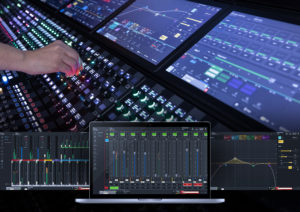
My main console is a Calrec Artemis, and we have a Brio on standby as a backup. The Artemis is built with everything I need, with customised fader breakouts for tracking all Atmos channels, VO mics, upmixing and routing to Atmos busses as needed, music playback, SFX etc.
The Brio is one part of our backup in case there’s an issue with the Artemis. The Brio is built with a microphone complement from each of our studios in Italy, four tape machines, TRIA outputs from our TD’s switcher, and a few other flexible routing options. The board’s output is sent to a discrete MUX path that our TD can then route as the audio source to air if I need to mix from the Brio.
Immersive audio is now standard for the Winter and Summer Games. When you are in the planning and build stage, what elements do you prioritise and why? How many audio channels did you manage?
99% of the content out of NBC Sports is 5.1 (with a stereo downmix). Most of the Games are mixed in Atmos, in a 5.1.4 format. Each PCR’s output is 16 channels wide.
Overall, we approach the 5.1 just as we would other events, with crowds all around but rear-focused, and any on-screen elements (athletes, on-cam etc.) being front-focused. Voices are 99% centre-only unless they are mixed into a feature (even then we tend to upmix so the voices still push to the centre). The Atmos is a mix of music, SFX (graphics etc.), and “air-related” NATs. To maximise the impact of the heights, we’ve found it’s best to pick your moments when to push it. For anything that lives in both the 5.1 field and heights simultaneously, you usually want to process the heights instance differently, be that with EQ, subtle auto-panning, reverb, etc. We usually achieve this with outboard processing. For the Games, I love pushing the heights on music stings to really make the most of the moment.
How have immersive audio mixes for the Games evolved over time? What features on the mixing console help streamline immersive mixing?
The available bussing options on the Artemis make it easy to quickly build and route for Atmos. For additional control we tend to build separate busses for elements that will output to both the 5.1 and heights fields, and the ability to designate a group as “Heights Only” makes for quick and easy routing and monitoring.
The NBC team also mixed on a variety of Calrec Argo consoles, as well as an Apollo console which formed the heart of the voiceover booth system. How were the Argos used and where were they located?
There are multiple Argo consoles in Stamford, and they were used on events like Curling, Sliding, and others. They interfaced with MiCo venues by bringing in feeds from OBS, and discrete NBC audio paths, and mixing in Stamford-based elements. They can be the standalone source to air, or they can interface with the NBC Daytime PCR to simulcast. Some events have talent in Italy, some in Stamford, and some a combination of the two. We can also have talent at home, if need be, and Mike D’s plan for the Games allows for them to be easily integrated if that needs to happen at any time.
How does mixing remotely differ from mixing onsite?
I’ve been onsite as A1 for Football Night In America, 3 Breeders’ Cups, an NHL Stanley Cup Finals and more, and I’ve also done a LOT of REMI shows/events. At the end of the day, a REMI production offers a more controlled environment, more resources, and more time to prepare in the ACR/PCR. Tools like the RP1 allow for us to mix IEMs/IFBs as if the talent is local to us.
Having productions onsite offers less trunking issues from a comms perspective, and to be in person with the rest of your audio crew is sometimes helpful with setup and troubleshooting, plus there’s the comradery and experiential element, but the technical benefits continue to fade as tech continues to improve.
Each venue adopts a closed Dante network and all audio is handed off at Stamford as MADI. Why is the audio managed in this way and what are the benefits?
Our MiCo studios have Dante and A/D into the RP1s, and each venue has its own mix of OBS and NBC’s mics. All audio is sent to Stamford via embedded discrete channels on TX paths, as well as over a Media Link MADI AOIP for select items. This gives us redundancy and flexibility to route ad hoc audio as needed.
You’ve just finished mixing NBC’s Football Night In America (FNIA) on Calrec’s Artemis console. With record-breaking viewership numbers year-on-year it is one of the most-viewed studio and primetime shows in the US. How often have you mixed this show and what makes it so appealing to audiences?
2025-26 was my first season as the lead A1 for FNIA. Mike DiCrescenzo was the lead A1 for I believe the last 12 years. I was his primary backup since 2020, mixing one-two shows per season as needed. FNIA encapsulates Sunday Night Football, which tends to have the premier NFL matchup of the week. With American football being so popular in the US, it’s almost expected to always lead the rating charts. So much work goes into making sure we deliver on living up to the fans’ expectations, and it might be cliche, but it’s an honour to mix that show.
Big sports broadcast events have extended their reach across streaming and social channels to provide more fan engagement. Has this effected how you approach your mix? If so, how?Outside of bird-beating (closing VO mics, keeping only NATs online) during commercial breaks and before/after streaming, the biggest impact of streaming is on the need for dual-play of commercial/pop and cleared music on your main TX paths. Bird-beating has long been used to protect talent during breaks, so it’s not that it’s new, it’s just even more important with streaming because depending on the platform you might have zero control over what actually airs worldwide.
What have been the key technological milestones you’ve witnessed in your time in broadcast audio and how have they changed what you do and how
you work?
I’d say the three biggest advancements to have impacted my workflows are IP controlled devices (most notably the Calrec RP1), the implementation of IP routers and the inherent flexibility they provide with virtual assignments, and the embracement of Dante, just because it can be so wildly deployed to connect different devices from mics, to comms beltpacks, interfaces, and entire 64 channel flows.
What advice would you give to someone who’s just starting their audio engineering career?
My advice to anyone starting out is simple, and relevant for any role in life. Be good at what you do and be better to the people you work with. Obviously, you need to be able to meet the moment and expectations of your position, but people will remember how you were as a person equally, if not more, in terms of how you handled yourself through stressful times, and how you treated them throughout theirs. Calmness under pressure, the ability (and eagerness) to receive and retain new information, decisiveness, respectful and succinct communication all go a long way. Being technically proficient can get you a gig; being a decent human will get you repeated ones.
More to the point, get yourself in the door as an A2 / assist somewhere. Get exposure to productions where you can absorb what everyone is doing around you while performing your role. Make mental notes of something new to you, and if you can’t ask someone, then research it later that day. Diversify your skillset initially so you can get in the door more often than not, and then find where you want to specialise from there. Make use of any downtime you might have and ask someone that’s doing what you want to do as many questions as you can – most of us are more than happy to talk shop.
How do you see audio evolving in the next five years?Broadcast and event production audio will continue to evolve with more semi and fully-automated tools coming to market. AI-driven processing, both as external plugins and eventually more so natively onboard hardware, more IP-controlled devices, virtual-soundcard routing options, all of these will give A1s more nuanced control, with opportunities to be more creative and technically dialled-in than ever before.
It’s a reality that the pressure to do more with less will continue to impact all parts of our industry, and those who actively embrace these next-generation tools will continue to be the leaders in our field.
What do you love about Calrec?
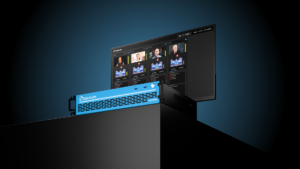
I began mixing on a Calrec Alpha, and most of my time as an A1 has been behind the Calrec Artemis and Apollo generation, first with Hydra cores and now ImPulse IP cores. I’ve also mixed on Calrec Brio consoles, and now the Argo consoles and appreciate what Calrec is doing to continue the evolution of broadcast consoles, especially with True Control 2.0, the next‑gen evolution of Calrec’s RP1.
The Artemis has long been the standard in broadcast consoles for my taste, and I’ve appreciated how reliable they are, how sonically transparent the EQ and dynamics are, and how quickly you can build on them. At a facility like NBC Sports, we’re constantly building and adapting shows, so streamlined show building is paramount for us.