Remi Beaudouin (Chief Strategy Officer, Ateme) gives his predictions for the Broadcast & Media Industry in 2021.

Interviews with IABM Members
Round table and panel discussions
Industry insight and presentations
Remi Beaudouin (Chief Strategy Officer, Ateme) gives his predictions for the Broadcast & Media Industry in 2021.
Brick Eksten (CEO, Qligent) gives his predictions for the Broadcast & Media Industry in 2021.
Daniel Fenton (Sales Director, Europe, Middle East & Africa – Sony New Media Solutions UK) gives his predictions for the Broadcast & Media Industry in 2021.
Andreas Eriksson, Head of Telstra Broadcast Services, gives his predictions for the Broadcast & Media Industry in 2021.
YouTube recently announced support for HDR content. The Cobalt 9992-ENC is capable of transmitting live HDR content to YouTube, both in HD and 4K resolutions. While HDR is available for both H.264 (AVC) and H.265 (HEVC), YouTube elected to support it only for HEVC.
In order to stream live HDR to YouTube, you need the following:
Prior to starting the encoder, you need to create a live broadcast at YouTube. Go to your channel, click on the indicated icon at the top of the page, and select Go Live:
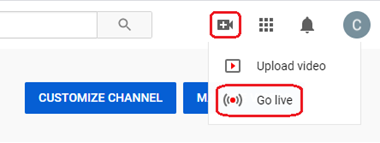
Once you select this, the following page opens:
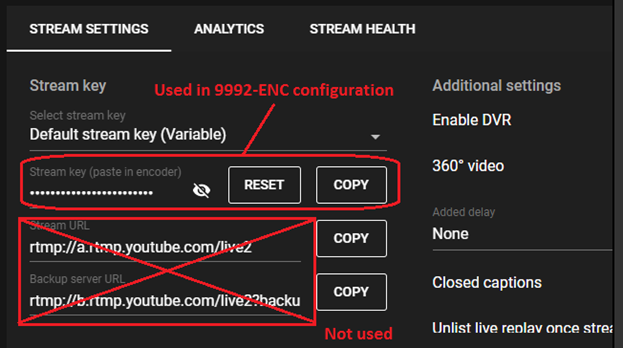
The most important part is the Stream Key, which is required for the 9992-ENC configuration. Also note that the Stream URL part is not used – we will be streaming HEVC content, which is not supported by RTMP. The streaming will be through HLS, and the URL is different.
While the 9992-ENC supports HDR for both AVC and HEVC, YouTube only supports it for HEVC. Therefore, the first step is to configure the 9992-ENC for HEVC support. This is done in the Encoder Mode tab, as shown below.
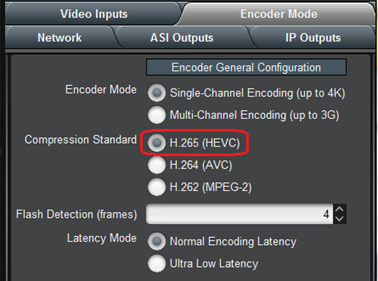
The other settings in this tab can be chosen to suit your needs.
HDR operation requires 10-bit encoding mode. This is selected in the encoder Basic tab, under Video Parameters:
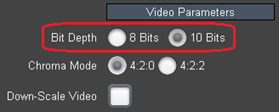
YouTube requires appropriate video signal metadata. This can be done in the encoder Advanced tab. When you check the Enable Video Signal Type box, the other parameters will become available. Here are the appropriate settings:
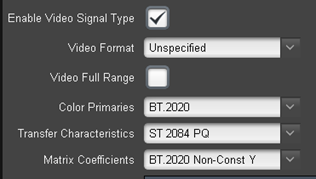
However, make sure that the Color Primaries match the actual signal.
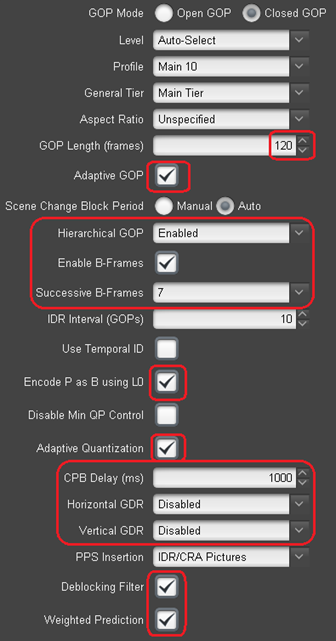
These settings are not required for interoperation with YouTube, but are recommended to get the best quality out of your 9992-ENC. They are found in the encoder Advanced tab and are illustrated below.
Since HEVC is not supported by RTMP, the stream has to be supplied to YouTube as an HLS stream. The standard way to send HLS streams to a remote server is through HTTP Push. These selections are made in the encoder Output tab, illustrated below:
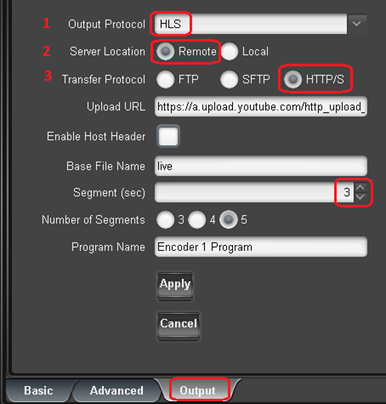
The steps are:
https://a.upload.youtube.com/http_upload_hls?cid=xxxx-xxxx-xxxx-xxxx-xxxx©=0&file=
Replace xxxx-xxxx-xxxx-xxxx-xxxx with your YouTube stream key, which you obtained from the YouTube web site (see YouTube Configuration above).
Once you have all of this configured, start the encoder. Note that it may take YouTube up to 30 seconds to start showing the video.
Welcome back to the In the Hub podcast! This week, we’re speaking to Thiago Taboada – a broadcasting professional based in Brasil with 15 years of experience working with MTV, TV Cultura and Canal Woohoo. Thiago recalls the moment that encouraged him to embrace the technical side of broadcasting, reveals the biggest challenge he has faced in the industry and how content creators can navigate the ‘Uberization’ of the broadcasting and media landscape.
We’re back with episode 14 of the In the Hub Podcast, brought to you by PlayBox Technology UK! In this episode, we talk all things management with David Treadway – Chairman at iKO Media Group. David’s proven career in a variety of high-level management positions makes for some great broadcast-based COVID-19 advice and some truly refreshing optimism.
This informal session offers advice on how to enter the world of Audio Engineering from a UK perspective, including:
Hosted by Dave Letson, Vice President of Sales at Calrec, featuring Robert Edwards
Robert Edwards is still at mixing regularly after 46 years in broadcasting. (He is currently in Bovingdon (using a Calrec) for a quiz show with Michael McIntyre).
Just completed Britain’s Got Talent from LH2. Next year, he’s working on the Masked Singer. Mixing the Eurovision Song Contest (World 5.1 and World Radio Mix) from Rotterdam to which everyone else adds their own commentators. Olympics, Tokyo to mix the world feed for the Opening and Closing Ceremonies of the Olympic Games.
In August this year, we convened a panel of marketing and PR agency leaders to ask them about their experience of the pandemic and lockdown. What effect did it have on their businesses? How did they rise to the challenges? What changes have they made – and what are the likely longer-term effects of the massive shake-up everyone has been through? On the panel were: Sadie Groom, MD of Bubble Agency; Jennie Marwick-Evans, MD of Manor Marketing; Rob Ettridge, COO of Red Lorry Yellow Lorry; and David Lawrence, MD of Platform Communications.
Could you briefly tell us how the last 6 months has impacted your business and your customers?
Sadie Groom has seen positives and negatives: “It's been an interesting time; there's no manual for this, but we would sum it up as react, recover, reimagine. And that's the way that we've gone through the whole process.” She reported some inevitable clients putting things on hold in sports, and had also signed the lease on new premises in December – which her team had yet to move into. “But lots of positives - from our side and from our clients’. My clients are having to really think about their business - what data they've got, what content they've got, what processes, how they look after their team and how they can use our additional services we offer. For us and the industry that we love I think everyone has opened up a lot more. , For example we organised a call with all the PR agencies just before NAB got canned; I don't think that would have happened before. So lots of sharing, helping people out and a feeling of all being in this together.”
Rob Ettridge also reported clients pausing campaigns in the live events and live sport sectors, but he has also seen “lots of positives. As a broader tech agency, our AI, blockchain and cybersecurity clients have been really prospering, and certainly for Q4 and into 2021, it's looking a lot more positive for our new business pipeline. The cancellation of shows has driven clients to ask for different kinds of marketing support - lead gen campaigns, content marketing campaigns, support with managing customer communications, etc. We're all having to be a bit more creative, think a little bit differently, and be a bit more flexible for our clients. We've also spent more time on our CSR initiatives to continue to give something back to the industry during these weird times – for example our partnership with ACCESS:VFX to promote inclusivity and diversity in the VFX, animation and games industries.”
Jennie Marwick-Evans also reported doing different kinds of work for her clients: “We've put the emphasis on business continuity. We're very fortunate - we've actually gained some clients during these challenging times as well. But it's not traditional PR - it's far more commercial marketing and sales.” Jennie’s team has also been working more closely with clients to help them move from marketing not just the technology itself, but to the use and application. The real benefits and ROI. “We've completely switched how we actually work with clients.” While Jennie has missed face-to-face, “The last few months has been a good reset for everybody in a way - in what we do, how we do it - in our lives as well as our companies. I think it has been an opportunity; you've got to know way more about your clients and their customers than you would ever have known before.”
David Lawrence of Platform Communications said, “We’ve focused on supporting our clients and our team in the best possible way. I'm very proud of how our team has come together and really been supportive of each other and our clients. We've been very keen to keep training going; I think that's especially important when people are working remotely. I think the strength of our team is reflected in the fact we’ve won six new clients in the past few months. Our clients have had to, in many cases, face up to a total shift in business priorities, the market's shifted massively in all sorts of ways. But I think in all of this, communications have been shown to be more vital than ever. Every company needs to ensure visibility and continue to drive sales conversations. We're really proud to have been part of helping our clients move forward.”

How did you adapt during remote working and what tools did you use to keep the creative juices flowing?
“With a global team we have always had to work remotely but we have had to get used to being creative on yet another Zoom call which can be difficult.” Sadie Groom reflected, “so we would spend a bit of time outside going for a walk around somewhere, share different people's music to try and inspire things and yes we did a lot of quizzes! What we found was one of the best ways is being part of different business and industry groups. We've got a business coach that we work with, and he got together his clients very quickly, and every Friday we were able to share learnings and talk creatively about what we're doing - our business and our clients. In the past, people would have said "I'm not going to tell you that'. They're all in different sectors - the PR and marketing sector, Facebook groups or things like forums have just been amazing. And I think that's really helped inspire other creative thoughts. That's been the key to it for us.”
The lorries were already very used to working and collaborating remotely. “We have teams in Boston, LA, Berlin, Paris and London, plus our global Convoy partner agency network, so a lot of our work is virtual collaboration anyway – using tools such as Slack. It's what we do to come up with global creative campaigns for new business pitches and for client campaigns,” Rob Ettridge explained. “It’s more important than ever to involve and engage our teams, and help get them thinking beyond the day-to-day. We have our weekly get-togethers - lorry breakfasts, lunches, quizzes, socials, etc - all types of activities to encourage the teams to engage, collaborate and think differently.”
Like the lorries, Platform already encouraged flexible, remote working pre-pandemic, though “We’d never want to be an entirely virtual agency long term,” David Lawrence added. “But there's no doubt that brainstorming is much easier to do in in person. It's important to bear in mind though that the secret of good brainstorm is actually much more about having a good brief to start with and preparing a good brief for the people that are going to be in that brainstorm. And to do that, you have to make sure that you've got a genuine strategy and genuine insight that you want ideas to support, rather than just getting a bunch of people together just to shoot the breeze about a topic; you'll get much better results from any brainstorm if you do the prep time.”
“We've invested in many tools including a dynamic whiteboard where you can actually collaborate together in a virtual world,” said Jennie Marwick-Evans. “We also did picnics and other events - everybody had to bring a certain thing, a certain colour or whatever else it was type of food. When we started lockdown we used to do twice a day Zoom meetings, but I soon lost the will to live on that, and it went down to one a day. And then it, well, stopped, basically because it was too hard to actually chat about different things in this environment rather than face-to-face.” Jennie also put priority on offering training for her staff and their wellbeing and is proud of how they stayed and grew #TeamManor.
In the absence of trade shows what are the ways your customers are re-focusing their efforts to generate new leads?
Sadie Groom has been working with the Bubbles’ clients to identify what leads came from trade shows and what were the other sources. “How they can work their partner community better, especially when there is no choice and you're not going to meet your representative from the Philippines at certain show for example. We've been trying to look at the best bits of shows. Not just what people like and don't like, but what works, what doesn't work; what can be recreated really well, and what can’t – ‘not another virtual demo!’ I think there's some real basics like LinkedIn – using that massive network to actually get sales, that people can tap into.”
“One positive is that it’s made everything a lot more measurable,” said Rob Ettridge. “You can track the buyer journey from the moment you find them through to how they're engaging with you, when they visit your website, engage with your content, sign up for an event - whatever they're doing. Customers are rightly looking much more closely at their return on investment rather than just having a huge stand and hoping that someone passes by and wants to buy the latest product. We’ve been doing this content marketing based engagement for a while now. Our Brands to Business approach helps track the journey from when a company interacts with a brand to when they actually buy from that brand – and makes sure that the right content reaches the right audience on the right channel at the right time. That’s where our campaigns are increasingly shifting with our clients.”
“People buy from people,” said Jennie Marwick-Evans, “that’s what, as an industry, we’ve relied on and thrived on. People have LinkedIn but don’t use it. We give our clients assets to put on their personal LinkedIn and they are really shocked at the level of engagement they get. It’s about educating them on alternatives to shows. It’s taking them out of their comfort zones, and it can be proved through tools like Lead Forensics - watching a journey over a website and seeing what people hovered on and what they didn't and then look at why - is it because it's written or a video or whatever else. And it might be somebody who was never going to walk past your stand at a show, and now you've got access to them. If you maximise every single opportunity that you're being given right now, you're going to be streets ahead of your competition.”
“The disruption to trade shows and conferences has been a huge change because those events are such a massive part of the industry,” said David Lawrence, “We conducted a major survey report called ‘The new world of tech communications’ that showed clearly that the future of events is a hybrid of physical and digital. Nearly three quarters of the journalists and analysts we spoke to said that virtual events can sometimes be more useful than physical events. When events do happen again, 90% of those we spoke to said that they want more content from physical events to be available online. There’s no doubt that digital marketing will continue to grow, driven by the shift toward technology sales on a monthly recurring basis. This means marketing needs to keep solutions in front of potential buyers all year round. There’s going to be much more focus on brand, much more focus on the audience, much more focus on ‘what is our purpose in this market?’ To be successful, technology companies need strategic marketing that drives real conversations with potential buyers on an ongoing basis.”
In this new virtual world, have you had to shift your internal team’s efforts to support your clients’ needs and are there any new services that you are offering as a result of this?
“As a company we have always offered marketing services but not all of the team were skilled in it so we’ve invested a lot in training – every conversation I’m having at the moment is around digital marketing,” said Sadie Groom. “We've also gone out and found some amazing partners for where we can't be specialists - I can't suddenly get in a team of 12 people that are all PPC experts. We also widened our PR network called The Big Bubble; a lot of our clients are looking into new sectors and territories, and we’ve also brought in staff with expertise in those areas to support them.”
The lorries have been offering a wider range of marketing, customer and employee communications and lead-generation services for some time – and now clients are tapping into them more. “What's really come to the fore is the mantra of how you deal with the client - doing the right thing, getting the teams to think above and beyond and not thinking too rigidly,” said Rob Ettridge. “We need to be sensitive to clients’ challenges as well: you can't just say no, that's the scope of work, those are the payment terms etc. You can't hold them hostage to those sorts of things during these times. Instead where needed we’ve pivoted our campaigns to support our clients with managing difficult customer or employee communications, and getting sensitive messages across in the right way. That’s been invaluable to them.”
“One of the biggest things is to challenge clients in some respects, and their partners and their customers. I am looking at it from the commercial angle and achieving a purchase order at the end of the day,” said Jennie Marwick-Evans. She helps her customers by challenging why and what they have always done in these changed times. “How you actually get technology to market these days is really crucial. We now understand our clients’ pain points a lot more, and help them manage and prioritize those pain points; this is a big part of what we can do. And it can be something really obscure that they would have never thought is a priority and suddenly it becomes a real priority.”
“One thing that we've offered before has become even more relevant now is social influencer campaigns,” said David Lawrence. “In B2B tech, people buy from people who they see as being credible sources of trusted insight. This is an incredibly sociable industry - people getting together to discuss things and find out things from each other is what this industry is all about. But right now, it's harder than ever for that to happen. And certainly without shows and events, there's really limited opportunities for people to network in the same way that they would before. So, with a social influencer campaign, we help our clients be seen as the experts. And not just the brand as the expert but individuals within that company. We help connect them to the right conversations digitally. Our clients have told us this is a real game changer in terms of creating deeper connections with prospects. We help them open up all sorts of business opportunities by allowing them to, in effect, network digitally.”
What does the future hold for our industry and how are we going to have to adapt from a Marketing & PR perspective?
“None of us really know what the long-term impact of this pandemic will be,” said Rob Ettridge, “except that it will be a catalyst for long-term change. From a client and marketing point of view, it may be the wake-up call to think about how they need to measure the success of their marketing programmes. And clearly the move to lead-gen marketing will be a part of that. We'll see a lot more personalised campaigns directly targeting individual buyers or engineers within organisations, rather than just going for the big catch-all campaign. But I sincerely hope that face-to-face interaction doesn't go away completely. While we're all talking about digital as the future and being able to target people directly, we still want to meet in the pub, we still want to go to the shows and events. Whatever happens, the M&E industry is pretty resilient, and we'll find a way to adapt.”
“You could argue there's potential for genuinely innovative technologies to take off more quickly than might have happened pre-pandemic,” David Lawrence added. “We've already seen that with cloud technologies for remote production. Marketing has got a huge role to play in making these new ways of working visible to the right people. And making sure that’s done in a way that’s truly audience focused, integrated and digital.”
“I believe there is no substitute for face-to-face,” said Jennie Marwick-Evans. “Digital is great, but actually seeing the whites of their eyes and being able to react to behaviour and the body language gets missed. So I think shows and networking will come back, but maybe a lot smaller and probably more intimate. Marketing will be much more personal – talking to the right people in the right language. If you make things far more targeted, people feel all warm and fuzzy – you’ve made an effort for them individually, and if you do that then they'll actually make the effort to invest in you as well. We’re working with our clients to be more targeted, focused, regional and relevant. And maintain your relationships with your clients, their partners and customers, you built through this pandemic – don’t lose that; people buy from and remember those relationships and how supportive you were, so the rapport you have with them and you've built up over these months is vital to maintain.”
“Strong companies are going to get stronger, and we're going to see a lot of consolidation and more focus on budgets,” said Sadie Groom. “People that have reacted have been agile and will take that mentality forward and benefit out of this. I also think there is going to be a wider focus on diversity and inclusion; corporate purpose and social responsibility will be more important. It’s going to be interesting – it’s been a challenge that I don’t want to happen again for the rest of my life but I think we’ve all learned a lot – every day has been a school day on so many levels. Everyone we're talking to has got their own version of build back bigger and better and that is how the industry we love will survive.”

Across the industry, most implementation and transformation projects have traditionally been collaborative because individual groups of people from different companies and multiple disciplines work together to achieve a common aim. But it is often the case that they are working alongside each other rather than combining their intellect and jointly determining the best solution for a client, even if that means their system or technology is not core or managing some of the key functions as part of the overall solution. As systems have become diverse there is a real Venn-like overlap of functionality and it is essential that vendors now work side by side, within these common areas, to determine the most optimal solution for that workflow, operation, site or organisation.

Three Media has adopted the approach of intellectual integration as a regular business practice, especially for our latest consultancy engagements, where we have run and architected transformation programmes resulting in wholesale change across a client’s organisation. In each, it has been critical to bring all vendors together through a series of workshops to jointly agree which system is the master of the data and the function. The outcome of this approach is that the client benefits from the best possible design with near zero duplication, optimised system use, and a group of vendors that are invested in the final solution.
As part of these type of consultancy projects, we have seen a shift in clients’ expectations around vendor selection with the emphasis moving towards delivering business value rather than understanding in depth the underlying system technology. We have also seen that clients are less concerned whether a solution is a single or combined system offering, so long as it is, in total, state-of-the-art. This has opened the doors for more product vendors to offer collaborative partner solutions rather than to develop new functions and extend internally.
We considered this change of focus when re-designing our own product, XEN:Pipeline, a highly automated business content management system. As part of this process we re-defined the technology stack and identified new functional areas. For each, we evaluated if the development should be managed internally or if solutions already existed.
As the XEN:Pipeline product is highly automated with its goal to transform an operation by reducing the cost and time to process, maximise efficiencies and generate new revenue streams across the content supply chain and its associated workflow, it was important that any existing solutions evaluated adhered to these principles.

We investigated potential partnerships and if they could be incorporated into XEN:Pipeline without adding risk and overhead on quality, performance, flexibility, and speed to make changes. One of the commercial drivers was to have a near zero dependency on the vendor selected.
One new feature of the technology stack was the introduction of an orchestration layer. Many broadcast operations today are looking to move away from a segmented/departmental methodology to open, automated workflows that are quick and low cost to change. We are strong advocates for moving as much of the workflow and business logic into its own layer rather than being embedded within vendor systems. This degree of orchestration is not fully achievable within our ESB (enterprise service bus) but needs to be enabled through the introduction and integration of a BPM (business process management).
Given that we have worked closely with the digital business platform specialist Symbox on consultancy projects in the past, and our collaborations resulted in innovative and efficient solutions for the clients, they were a natural fit to be selected for the business process management layer within XEN:Pipeline. The Symbox BPM is an enterprise class solution that is scalable and superior to its main commercial rivals in many respects, but more specifically within the UI where users are able to design, build, view and easily identify failures.
Around 95% of the business logic within XEN:Pipeline is now either within the internal configuration layer or the BPM. This significantly reduces the regression cycles and considerably lowers the cost and time to make a change.

This has created something that is unique in media and broadcast, which would not have been possible without the collaboration between Three Media and Symbox. Not only have we transformed the typical iterative vendor model of develop, regression, deploy, but we have also enabled XEN:Pipeline to extend outside of supply chain management and to introduce the combined force of the ESB and BPM into areas of the organisation that would not otherwise have been considered. Our industry knowledge, combined with Symbox and their experience of driving effective business processes across crucial areas such as finance, IT or HR, has created a unique offering that can be rolled out across a company or an enterprise.
There is also the opportunity for clients to extend and manage workflows and processes within their own suppliers and distribution points, gaining even more control over the end to end supply chain.
This collaboration has resulted in several benefits for both parties and opened new commercial opportunities. The Symbox brand and reputation is gaining recognition across the media and broadcast industry as a trusted vendor. For Three Media, the XEN:Pipeline technology stack is greatly improved and more powerful in its functionality, offering something new to the industry. Looking to the future, and utilising the wider network connections of both companies, we have introduced a joint sales strategy to focus on identifying opportunities that could benefit from our collaboration.
Creative collaborations bring about a renewed energy across teams, motivating the other to push forward to create the most powerful solution for the benefit of the client. This is certainly true of this partnership.