Interview with Ken Wilkinson, Emmy Awards Nominated Audio Engineer
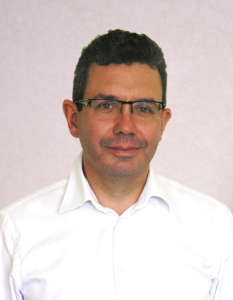
Ken Wilkinson is an Emmy Awards nominated New York audio engineer who specialises in production sound mixing for film, commercial, episodic and documentary work, as well as news, sports and entertainment television.
Tell us about your path into professional broadcast audio; how did you get started and what drew you in? And who do you work for?
My dad was a big influence in my interest in audio. He and my mom met while working together in the 70’s at Lafayette Radio, a retail electronics store that sold radio and Hi-Fi equipment in New York. He built an impressive stereo system and collected rock and roll records. While he was not a musician, his love of music and the equipment used to listen to it rubbed off on me.
In my teens I was experimenting with a mixer my dad bought before I was even born and I started recording music with my friends in high school in the late 90’s. I studied music and audio recording in college. After a while I decided I wasn’t interested in working in the music business, and decided to pursue audio post production in New York City. This proved to be more challenging than I thought, as internships were competitive and money was tight.
Discouraged, I got a job working for a local small business. These were some very valuable years where I learned a lot about business networking, marketing, the importance of training and keeping the highest standards while giving customers the best experience possible. I believe this time built a solid foundation of business savvy which has helped me greatly in my freelance audio career.
I began self-teaching audio post, and landed a few gigs sound editing and mixing student films in between working my regular job; due to the flexibility they gave me I was able to grow a portfolio and many contacts and before long my clients began to ask me to work as a location sound mixer for documentary and film.
This was exciting work and within a few years I transitioned away from my job and I began working on major episodic television shows, commercials and motion pictures as a freelancer full time. Along the way I worked on some studio shows as an A2, which piqued my interest in broadcast.
I met my mentor Greg Calvin in 2018, who was an established A1 in New York, who took me under his wing and taught me how to mix broadcast sports. Once I got my footing, opportunities quickly opened up as qualified A1’s were becoming harder to find.
Perseverance and willingness to explore different avenues of the business helped me develop skills to see the audio trade from many different perspectives.
How long have you been working with Calrec products and what Calrec consoles have you used over the years?
I first worked on Calrec in 2019 when I shadowed Greg on an Artemis. Later that year I mixed my first show on my own for Major League Soccer on the same console. Since that time I’ve worked on numerous mobile units and studios featuring Alphas, Sigmas, Omegas, Brios, Summas, Apollos, and this year for the first time, the Argo.
What differentiates Calrec from other consoles and what are your favourite things about using them? Can you give an example where Calrec’s features stood out and really helped you get the job done?
What I love about Calrec consoles are the speed and flexibility with which you can deploy a workflow. When walking into a truck in the morning, the clock is ticking and the game will happen whether I’m ready or not. Calrec consoles allow me to work quickly; live productions expect a lot from the audio team, and when a last minute request comes in the routing of a Calrec console allows me to deliver without having to think about it. If I can get a source into the desk, I can route it anywhere it needs to go fast.
You work in sports and live entertainment. What projects have you worked on and what project have you most enjoyed working on and why? How do these two genres differ?
I’ve worked in sports, news and entertainment and they are all different in their own way. I’m in the rotation of mixers for New York Mets baseball and New York Islanders hockey broadcasts, as well as the annual US Open Tennis Championships in New York.
On the news side, I’ve mixed NBC Nightly News and many programs for MSNBC including The Rachel Maddow Show. I have mixed a variety of entertainment shows, worked in the music dept for shows like The Tonight Show with Jimmy Fallon, and I am currently training to mix The Late Show with Seth Meyer for NBC.
As a freelancer I enjoy the great variety of genres in which I have opportunities to work. Sports are exciting and unscripted with very little time to build and FACS show. News has a loose rundown that is scripted, but open to fast changes and breaking updates with more of an assembly line, studio production style. Entertainment can be highly scripted and rehearsed, with some studio shows moving at a very fast pace, while many outside broadcast shows require extensive build time. Each type of production is unique and helps to build a well-rounded set of skills.
Can you describe a typical broadcast audio workflow that you use?
A typical sports workflow usually involves sources from a variety of inputs. On a single show, we often use analog inputs, field Hydras, DANTE, MADI and AES, and the Calrec sees them all as live inputs.
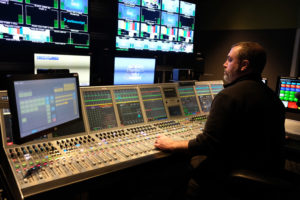
I use the desk to input announcer mics, build mix minus feeds for IFB’s and special mixes for camera operators and crew on PL. I build groups for announcers, effects, tape and music which I can use to process each type of signal in its own way, using them as building blocks to assemble my program mix.
I send full program and effects-only mixes to the router and tape room. I build a multitude of auxes for a variety of prefade or post-fade sends and tracks sends to share individual microphone feeds with partner broadcasters, and make sure production has all the prefade listens required in their personal monitors and intercom panels.
Many shows use virtual signage that requires building multiple effects feeds with variable delays, that we can automate with the use of GPIO in coordination with our TD.
What have been the key technological milestones you’ve witnessed in your time in broadcast audio and how have they changed what you do and how you work?
Without question, remote workflows have been the most significant advance I have seen in my short time in the industry. Each broadcaster has developed their own workflows and mobile unit providers have developed their own protocols for connecting with each other. It’s impressive to see how well a production can run with crew and equipment spread all over the country, seamlessly bringing a show to viewers at home.
What events have you covered in a remote environment and how does the skillset differ to when you’re on-site?
I’ve covered a variety of remote shows, on both sides of the remote. I’ve used the Calrec RP-1 on site as an audio guarantee for Major League Soccer and college basketball to give the extended control to our studio A1 over audio embedded under camera feeds, allowing local mic preamp control and phantom power without the need for an audio console on site.
We use RP-1s at NBC News to connect studios in different cities to our control rooms in New York, which allows the unique ability to send a mix minus for IFB returns, while allowing the anchors mic to be fed to their IFB locally so they can have the ‘mix plus’ feed they are used to in the studio, while eliminating the audio delay that would be encountered using traditional remote news workflows. In addition, with a few clicks I have instant access to RP-1s in Washington DC, Los Angeles, Miami and many other cities.
It’s key in this business to stay on top of the technology and open to the latest trends. Remote workflows allow you to use your existing skillsets in more flexible ways. I believe understanding IP networking is the greatest skill needed to navigate this new technology.
What is the impact of more remote and distributed production models on your job? Do you think we have reached a plateau with these more flexible workflows, or do you see them developing further in the future? How do you feel about them?
I believe the freedom allowed by remote production will continue to develop. One of the greatest impacts is the ability to work almost anywhere. I work many shows where director, producer and other key production members may be working in a studio in a different city than the mobile unit, or even at home needing only a monitor, an intercom panel, and an internet connection to do their job.
I’ve mixed audio on site, in a remote studio and even in one studio—remote controlling another studio! I’ve yet to mix from home but I do not doubt that this will become more prevalent in the future.
I enjoy the way remote workflows have impacted my quality of life, where I can mix a game happening in California from a studio in New York and go home and sleep in my bed that night. My family and I both appreciate that!
What features do you look for in a broadcast audio desk and what features do you use every day?
I look for lots of flexible outputs in a broadcast audio desk. My typical show will require many sub mixes and discrete feeds. Aux sends, track sends, and direct outputs offer many different approaches to getting signals outside of the desk.
The flexibility to set custom EQ settings on outputs, re-route outputs to other outputs and set individual delays to different feeds is what keeps me a step ahead in providing everything the show needs.
What other projects will you be working on throughout the remainder of 2025?
I am starting work on the 2025 US Open Tennis Championships for ESPN in New York where I mix matches in the Louis Armstrong Stadium together with legendary effects mixer, Jonathan Freed.
In the fall it’s back into NHL hockey with some Devils, Islanders and Rangers visiting broadcasts, NBA basketball with Nets and Knicks visiting broadcasts with some college football and basketball sprinkled in. New York is a very busy market!
The broadcast industry is a very different place today than it was even five years ago. How do you see audio evolving in the next five years? How do we encourage new talent into the industry to help continue to drive it forward?
In the next five years I see audio continuing to evolve in a few ways. AOIP is already here and developing with new technologies like ST 2110. Remote workflows are expanding as well, including remote intercoms.
I encourage new talent to lean heavily into education including Dante, IP Networking, and intercoms, while continuing to study and develop best practice using analog audio as it is the foundation to understanding advanced workflows.
What’s the one piece of advice you’d give to someone coming into the industry?
One piece of advice I’d give to someone coming into the industry is to remember that despite the cool tech and the sexy audio gear, broadcasting is a people business. Building your professional network is as important, if not more important, than technical skill. Work on improving your communication, both written and verbal.
Find a mentor that can show you how to navigate the industry. Go to industry events; meet people and shake hands. Develop a reputation of integrity and clients will call you back. Build a social media presence that supports your professional development. Use LinkedIn to network with pros and grow your opportunities.
Don’t be discouraged if it takes a little while to find opportunities. Be prepared to keep a ‘regular job’ as long as necessary before making the jump to freelancing full time.
What do you love about Calrec? How would you describe Calrec in three words?
-
Ubiquitous – I love that I can count on finding a Calrec in most mobile units and network studios.
-
Flexible – I love that I never run out of routing options.
-
Friendly – I love that familiar interface and visual feedback is easy to work with.