TAG’s IP-native Realtime Media Platform evolves with actionable visibility, open integrations, and audio intelligence, all in software
New York, February 25, 2026 – TAG Video Systems (Booth W2323) will unveil new capabilities across its IP-native Realtime Media Platform at NAB 2026. New releases include visual service health diagnostics, native audio monitoring, open SDK integrations, and expanded color analysis tools. Together, they give broadcast teams more visibility into their operations while reducing the standalone hardware and software required to run them.
More Observability: From Alarms to Answers
Traditional monitoring tells operators something is wrong. TAG’s latest tools show them exactly where to look and what to fix.
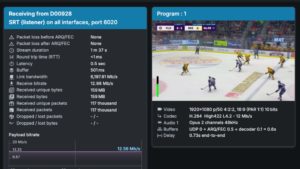
Lens, TAG’s newly announced visual service health analysis feature, organizes monitored sources into customizable visual hierarchies, by data center, content type, signal path, or any structure that matches how an operation works. Color-coded severity indicators show at a glance whether an issue is isolated or systemic, enabling root-cause analysis in seconds rather than minutes. Lens joins TAG’s existing suite of data visualization integrations, adding real-time workflow insight directly within the platform so operators can diagnose issues without switching to external dashboards.
TAG’s data integrations complement Lens by making monitoring data available to over 70 external destinations. Whether teams use Grafana, Elasticsearch, Splunk, or other platforms, TAG’s open data architecture means monitoring insights flow into the dashboards teams already use, so operational decisions are based on real data, not gut feel.
Expanded QC Station capabilities deepen that visibility at the stream level, with real-time waveforms, vectorscopes, histograms, and HDR validation across Rec.709, Rec.2020, and DCI-P3 color spaces, all accessible directly within the multiviewer mosaic.
Less Tools: One Platform Replacing Many
Every capability announced at NAB 2026 replaces something that previously required standalone hardware or separate software.
QC Station’s color analysis replaces dedicated hardware analyzers and standalone test signal generators with a single software-based workflow. New native Dolby E decoding eliminates the need for dedicated external decoders, giving engineers real-time visibility into multi-channel audio program configurations directly within the same interface they use for video monitoring. Kantar watermark detection removes the need for separate watermark monitoring systems. This verifies watermark presence and integrity at every stage from live production through playout and distribution, ensuring measurement accuracy and contractual compliance.
TAG’s new Software Development Kits (SDKs) extend this consolidation beyond TAG’s own probing points. Third-party platforms can integrate directly with TAG’s monitoring infrastructure, aggregating data from multiple sources, including external and unsecured locations, into a single workspace. TAG and Witbe’s integration is a flagship example: Witbe’s real-device testing data and TAG’s in-network stream monitoring are brought together, giving operators a consolidated view of quality across the entire delivery chain.
On the infrastructure side, support for NVIDIA ConnectX-7 SmartNICs enables significantly higher stream density per COTS server, a direct path to lower cost-per-channel for large-scale uncompressed ST-2110 deployments.
Visitors to Booth W2323 at NAB 2026 will see firsthand how these capabilities work together, with deep, end-to-end visibility across workflows and a platform built to scale as operations expand.