Calrec – Standing on the Shoulders of Giants
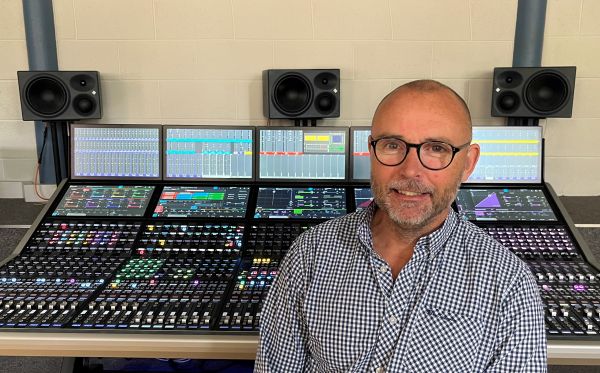
Sid Stanley, Managing Director, Calrec
Covid taught the broadcast industry many things, and the requirement to quickly adapt to new ways of working is perhaps its lasting legacy. As broadcasters scrambled to get content on air, it was a stark reminder that companies need to ensure their business, supply chains and technologies are agile and flexible enough to be able to withstand different kinds of widescale disruption.
Since then, companies across the industry have come to value the importance of collaboration as a key business driver. As Henry Ford famously said, “Coming together is a beginning, staying together is progress, and working together is success”. He should know, he forever revolutionized the transport industry and his legacy of affordability and reliability is still standing strong.
Technology shifts in the media industry might not generate the same headlines as motor cars, but arguably impact more people’s lives, and the speed of change is continuing to accelerate. The move to IP has enabled broadcasters to work remotely, delivering immersive and personalized audio, whilst leaning into the cloud for additional resources.
Collaboration builds resilience and the expansion of production ecosystems over the last five years has helped broadcasters strengthen their infrastructures. As the adoption of sustainable, cost-effective, and flexible remote and distributed production workflows continues to develop, the ability to control any system from anywhere is creating more agile ways to work. Providing access to more audio cores, more faders, more surfaces, and more control from any location gives users ultimate flexibility delivering content to air.
These distributed workflows are designed to meet the needs of the production rather than the other way around, and in a world where consoles no longer operate in isolation, networks necessarily become more complex with remote and distributed workflows locating IP processing cores on site, on edge, and on prem. In this new flexible broadcast environment, being agile makes all the difference.
Cost-efficient Resources in the Cloud
Another valuable tool in the remote distributed production toolbox is the ability to process and mix audio in a cloud environment. More recently, the growing acceptance of resources in the cloud has also encouraged broadcasters to spin-up cost-efficient cloud processing for one-off productions, with no extra CapEx investment in additional hardware. Cost-efficient resources in a cloud-native environment like Calrec’s ImPulseV deliver even more flexibility, especially for ad hoc single productions that need more processing power. It also creates an environment that meets broadcasters’ precise needs.
This has led to an increase in more ambitious large-scale orchestration systems and virtualizing of productions, and distributed DSP that enables large mixers with thousands of channels of audio to be replaced by lots of DSP in lots of different places. This gives more control to broadcasters by allowing a single surface to control multiple DSP engines located anywhere, providing versatility and virtualization. It is also driving down cost – the traditional model of buying enough processing for your biggest event of the year is redundant when a virtualized DSP engine can deliver the audio quality and feature set in a cloud-native environment.
The big advantage remote and distributed production delivers is the flexibility to locate both equipment and personnel resources where they can be used most efficiently. This could be as simple as allowing an audio operator to mix from home or as complex as a distributed facilities hub where studio-based facilities are used to produce multiple events from various locations. Both have significant benefits in terms of saving on time and travel expenses and also bring other benefits where equipment resources can be pulled from multiple locations to meet the needs of the production. Utilizing remote technologies can create endless combinations of control and processing components that can adapt to any size of production, matching the resources required to meet the creation needs of the specific content.
More Choice Means More Control
The expansion of these production ecosystems is where the real value is for broadcasters. Calrec’s True Control 2.0 exploits this trend, giving the ability to control any Calrec system from anywhere in the world. It provides access to more cores and more surfaces, wherever they are. In fact, each controller console can access up to five other consoles simultaneously to give broadcasters much greater levels of remote control without the limitations of mirroring or parallel controlling. In addition to ImPulseV, True Control 2.0 works with Argo M, Argo Q, Argo S and Type R, allowing any of these products to remotely control any other True Control 2.0 enabled product.
It enables broadcasters to embrace distributed production workflows to create endless combinations of control and processing components, making the best use of existing production equipment to meet the production requirements of every live event.
Calrec’s unique relationship with its customers and its adaptability working with other manufacturers in an IP environment has enabled it to help broadcasters define and embrace creative new ways of working. Knowing everything will work seamlessly together develops stronger working relationships with trusted technology partners. And because it’s those vendors who are in the best position to adapt, improve and develop their specialist technologies, it ultimately delivers more choice and more control over how we work and the agility to adapt how we control everything.
As Henry Ford discovered, it always was and always will be the job of a technology manufacturer to anticipate change, and manufacturers like Calrec don’t design equipment for the present; they design for the future.