
Wowza – Mobile Justice and Jotto: Real-Time Civic Engagement Powered by Video
When individuals reach for their smartphones during a tense moment, they’re often doing more than capturing a clip – they’re attempting to make their voices heard. The Mobile Justice app, originally developed by Quadrant 2 and the ACLU (American Civil Liberties Union), and powered by Wowza, has evolved into something larger, more inclusive, and more impactful, illustrating how streaming tech can be repurposed as a civic tool.
From ACLU Roots to Civic Platform
The ACLU originally launched Mobile Justice to give citizens a way to safely document law enforcement encounters. Deployed across multiple states, the app became a vital tool for preserving evidence, especially in situations where footage might otherwise be lost or erased.
Quadrant 2, the creator of Mobile Justice, recognized that the app’s core value could extend further. By enabling communities not only to capture video but also to contribute voice, text, and multimedia inputs, they saw the opportunity to move beyond incident reporting to real-time civic engagement. This realization led to the creation of Jotto.
Founded to create platforms that connect communities with decision-makers, Quadrant 2 builds civic technology for advocacy groups, political campaigns, and live event organizers. Jotto was designed to capture diverse citizen inputs, process them in real time, and deliver structured insights that leaders can act on. It retains a strong public service angle—capturing the voice of communities and amplifying marginalized perspectives—while also proving valuable in corporate and live event environments.
By connecting Mobile Justice to Jotto, Quadrant 2 gave the app a new purpose: rather than being tied to one association, any organization or group can be the recipient of an actionable stream of civic intelligence.
“Video accounts for the vast majority of internet traffic today, but its value in civic life is still largely underutilized,” said Krish Kumar, CEO of Wowza. “With Mobile Justice and Jotto, we’re showing how streaming infrastructure can go beyond entertainment—becoming a tool for empowerment, accountability, and stronger communities.”
Jotto: Real-Time Feedback Meets Actionable Insight
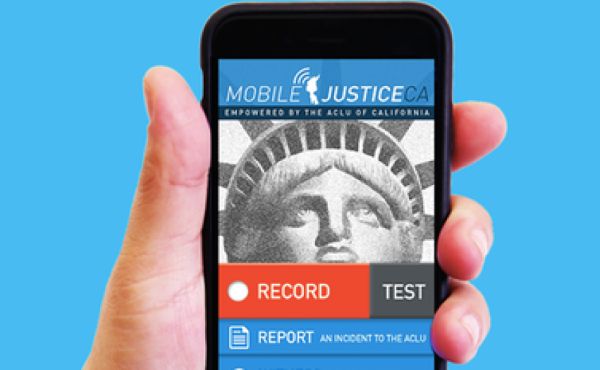
Jotto is built to make sense of unstructured, multimedia contributions from large groups of people. With Wowza Streaming Engine and Stream Recorders handling the capture and delivery of live video streams, Jotto receives citizen contributions securely and without interruption. From there, the platform organizes and analyzes responses to detect sentiment, highlight recurring issues, and provide dashboards of community trends.
“Wowza’s streaming and recording technologies were instrumental in transforming unfiltered feedback into actionable intelligence—fast, accurate, and scalable,” said Barry Owen, Chief Solutions Architect at Wowza. “For projects like Mobile Justice, where trust and immediacy are everything, the infrastructure has to be rock solid.”
This capability has proven particularly valuable in situations where time matters. Rather than sifting through hours of raw footage, advocacy groups and policymakers can immediately see patterns and themes emerging from contributions.
Real-World Impact
The impact of the Mobile Justice and Jotto partnership has been significant:
- Civic accountability: Communities now have a safe, secure way to document law enforcement encounters, preserving vital evidence and reducing the risk of erasure.
- Engagement: Jotto has boosted response rates by as much as 50%, helping organizations better understand and respond to public concerns.
- Policy shaping: Insights generated from citizen contributions have been used to inform debates at both local and national levels.
- Safety and trust: Because Wowza technology can operate in disconnected or restricted environments, sensitive recordings are not dependent on unreliable networks or third-party platforms – critical in high-risk situations.
“By integrating Stream Recorders with Jotto’s engine, we turn raw input into insights—quickly and at scale,” added Barry Owen. “It’s about making sure people’s contributions don’t just vanish into the ether but become part of a larger story.”
The Technology That Makes It Possible
At the heart of the workflow is Wowza Streaming Engine, a proven backbone for capturing and delivering live streams from mobile devices. Its ability to run in the cloud, on-premise, or at the edge makes it ideal for unpredictable civic applications.
Stream Recorders complement this by securely storing every stream for review or evidentiary use. The combination of live delivery with secure storage provides both immediacy and accountability – a dual requirement for civic use cases like Mobile Justice.
For Jotto, the key is adding structure to these inputs. Its analysis layer categorizes and interprets contributions, turning them into dashboards that advocacy groups, lawyers, or policymakers can use to identify patterns—whether recurring issues in policing, community responses to new laws, or emerging themes at civic gatherings.
“Without this type of workflow, organizations are left with hours of video they cannot process,” said Krish Kumar. “With Jotto, the information becomes visible, patterns emerge, and leaders can act faster and with greater confidence.”
Expanding Beyond Justice
While Mobile Justice was born out of a need for accountability in policing, the combination of Wowza and Jotto has already found broader applications:
- Elections: Campaigns are using it to capture voter sentiment at rallies and town halls.
- Corporate engagement: Businesses are deploying it at conferences and events to gather feedback in real time.
- Education: Universities and schools are exploring it as a way to understand student engagement and improve campus life.
The common thread is the ability to turn raw contributions into insights that can shape decisions.
A Model for Civic Technology
The story of Mobile Justice and Jotto illustrates that the greatest innovations in media are not always technical – they are human. By giving individuals the ability to safely record their experiences and ensuring those recordings can be transformed into meaningful insights, the platform bridges the gap between citizen voices and institutional action.
The Mobile Justice app, rooted in the ACLU’s original commitment to protecting civil liberties, has grown into something larger with Jotto and Wowza. It is no longer just a way to record incidents – it is a system that ensures those recordings become part of a wider, actionable conversation. With Wowza providing the infrastructure, Jotto delivering the intelligence, and communities driving the use, Mobile Justice is a powerful example of video being used not simply to inform, but to empower.