Black Box – Redefining Control Systems for a Hybrid, IP-Based World

David Isola, Director of Global Product Marketing, Black Box®
For decades, control systems have been the backbone of mission-critical operations, connecting operators to machines through fixed, point-to-point infrastructure. In sectors such as broadcast, energy, defense, and transportation, operational capability was determined by physical access and proximity.
However, the landscape has changed dramatically. Developments in virtual machines, cloud workflows, and distributed workforces have redefined what “access” means, fundamentally reshaping the requirements for effective control. Today’s workflows are increasingly complex, collaborative, and geographically distributed, with efficiency hinging on control systems that seamlessly span both physical and virtual environments. These systems must be intelligent and flexible, adapting to user needs in real time while delivering robust, centralized oversight.
Far from a simple technical upgrade, this evolution signals a deeper transformation in how organizations approach their infrastructure, user experience, and resource management.
From Fixed Infrastructure to IP-Native Agility
Traditional control systems were built around point-to-point cabling, physically binding operators and equipment to specific locations. While this approach worked well in stable environments, it falls short of meeting the needs of today’s distributed teams and dynamic workflows. Modern IP-native control systems, conversely, leverage existing network infrastructure, eliminating the need for proprietary cabling and enabling seamless high-performance control from a single control room — or even across continents.
This evolution delivers wide-ranging benefits: the reduction of CAPEX as hardware dependencies shrink, and the lowering of OPEX through centralized management and remote access. Operational workflows are further enhanced as operators can now manage critical systems from optimized control rooms, while hardware and servers remain securely housed in dedicated data centers, delivering improvements in thermal efficiency, reduced noise, and better ergonomics.
What’s more, IP-based platforms unify access to both physical and virtual assets, supporting protocols such as PCoIP, RDP, and H.264/5. They integrate easily with hypervisors like VMware, Citrix, and Microsoft Remote Desktop Services, ensuring operators enjoy a consistent and intuitive experience, regardless of where they are or what systems they’re managing. Because they are built for scalability, organizations can implement these solutions incrementally and respond nimbly as needs evolve.
Flexible Access: Virtual Machines and Remote Control
In today’s hybrid environments, flexibility is paramount. Contemporary control systems support shared access to virtual machines, allowing multiple operators to collaborate on the same system in real time. This capability is critical for team-based workflows found in areas like live production, security monitoring, and command and control.
By enabling shared access rather than provisioning a dedicated machine for each user, organizations benefit from a notable reduction in infrastructure overhead — fewer virtual machines means more streamlined licensing, reduced compute requirements, and simplified system management. These efficiencies do not come at the expense of collaboration; in fact, responsiveness and teamwork are enhanced without added complexity.
The emphasis on mobility amplifies this agility even further. Software-defined control systems support secure remote access from almost anywhere, using everyday hardware such as standard laptops or desktops. This is invaluable for disaster recovery, remote production, and flexible staffing models, permitting operators to connect to authorized systems securely, without the need for specialized equipment.
These capabilities are already transforming operations across industries: broadcasters are centralizing ingest and playout, energy providers are unifying their grid monitoring, healthcare organizations are coordinating diagnostics from afar, and smaller enterprises are leveraging compact, virtualized solutions to achieve robust control without heavy investment in infrastructure.
Smarter Interfaces, Leaner Infrastructure
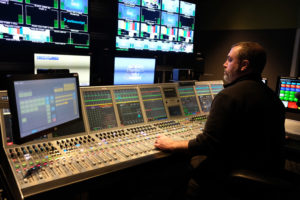
The traditional image of a control room cluttered with monitors, keyboards, and consoles is quickly becoming a thing of the past. Today’s advanced smart receiver interfaces consolidate access, enabling operators to manage up to 16 sources from a single keyboard and mouse across multiple screens. These interfaces are highly configurable and adapt dynamically to the task at hand, ensuring maximum responsiveness.
Operators benefit from customizable workspaces with tailored layouts, visual and auditory alerts, and advanced routing logic — all of which contribute to faster response times, reduced fatigue, and improved decision-making. Such ergonomic improvements are particularly valuable in high-stress environments like live production or emergency response.
Overall, the adoption of software-defined, IP-based control systems brings several tangible efficiency gains:
- Shared VMs reduce licensing and provisioning costs.
- IP signal paths eliminate dedicated KVM cabling.
- Remote access minimizes travel and hardware duplication.
- Smart receivers shrink control room footprints.
Collectively, these innovations foster agility, scalability, and sustainability while supporting broader goals like energy reduction and the extension of existing infrastructure lifecycles.
Centralized Management for Intelligent Oversight
As control environments grow in scale and complexity, centralized management becomes not just helpful but essential. Modern platforms provide comprehensive, real-time oversight of system health, firmware, and access policies across both individual users and machines, as well as according to specific use cases.
This unified management enables proactive monitoring and anomaly detection, facilitates robust policy enforcement and compliance, and ensures security is embedded at every layer through features like encryption, logging, and role-based permissions. Every user action becomes traceable, supporting audits and regulatory requirements.
Centralized management also enables organizations to distribute operations without losing oversight — a crucial advantage for facilitating global collaboration and ensuring that decentralized teams can work efficiently under consistent governance.
Enabling the Future of Hybrid Operations
As hybrid operations become the standard, control environments must support secure access, real-time responsiveness, and seamless coordination across locations. Teams are increasingly distributed, and systems are often a mix of physical and virtual — requiring platforms that can manage both with equal efficiency.
Modern IP-based control systems are designed for this complexity, simplifying how operators interact with infrastructure, reduce hardware dependencies, and unify access across environments. These capabilities help organizations respond to changing demands without overhauling their systems.
Interoperability will be essential. Control platforms need to integrate with legacy equipment, support a variety of data sources, and allow for incremental expansion. With the right foundation, organizations can scale effectively and maintain clarity as their operations evolve.