LucidLink – Cutting Carbon, Not Creativity: The Role Of Cloud-Native Workflows in Media’s Future

Michael Maimone, Chief Revenue Officer, LucidLink
Media never sits still. In the past decade, we’ve swapped tape for digital, cable for streaming and edit bays for global remote workflows. Every shift opens new doors for creativity and new challenges for how we work.
But behind every blockbuster, ad campaign or streaming series lies a cost the industry has often swept under the rug: the carbon footprint of media production. Terabytes of footage are duplicated, stored and transferred across multiple facilities and networks.
Hard drives are shipped around the world, and servers spin endlessly to store the same files in multiple places. Each of these actions consumes energy, generates emissions and quietly adds to a growing environmental burden.
Cloud-native solutions, particularly those that enable real-time data streaming, are emerging as a way to balance efficiency, speed and environmental responsibility. The real measure of tomorrow’s media production will be the balance between creative brilliance and environmental impact.
The Hidden Cost of Data
Consider how traditional media supply chains function. Large productions can generate hundreds of terabytes of high-resolution footage. To make content accessible, files are downloaded, duplicated and transferred multiple times across teams.
Every transfer consumes bandwidth and energy. Every duplication requires more storage, which means extra power for cooling, redundancy and maintenance. Even virtual production, often hailed as a greener alternative, can rack up hidden emissions thanks to its enormous data and rendering demands. Applied across thousands of projects, the energy footprint of the industry adds up quickly
It’s not just digital workflows. Physical drives are still couriered across borders and teams fly to production hubs just to collaborate. These practices slow production cycles and add heavy carbon costs. What was once considered the cost of doing business is now a liability in a world focused on efficiency, accountability and sustainability.
The Shift Toward Streaming Workflows
Instead of moving and duplicating data endlessly, streaming workflows allow teams to work directly in the cloud. With solutions like LucidLink, editors can access footage instantly, on demand, as if the data were stored locally even when their teams are spread across continents.
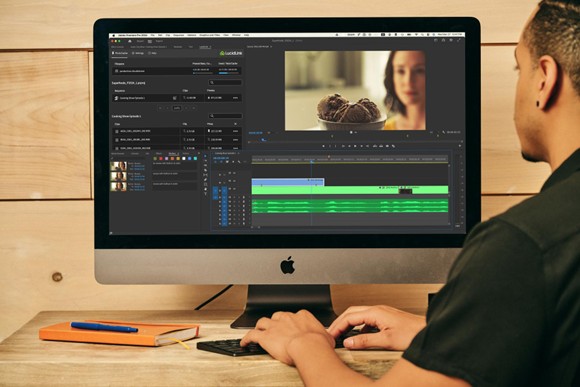
With one version of the truth, everyone sees the same files, in real time, maintaining consistency and accuracy across the production pipeline.
The sustainability benefits are immediate and measurable:
- Less duplication means fewer servers running and less storage capacity consumed.
- Fewer transfers translate into lower bandwidth usage and reduced energy draw.
- Remote collaboration eliminates the need for shipping physical drives or unnecessary travel.
Streaming workflows shrink the environmental footprint of media production without sacrificing speed, reliability or creative performance. Teams can collaborate seamlessly across time zones while minimizing the behind-the-scenes energy costs that would otherwise pile up.
Sustainability As a Business Driver
The case for cloud-first production is stronger than ever. Media leaders face rising energy costs, tighter budgets and increasing pressure from investors, regulators and audiences around carbon accountability. Studios and broadcasters are expected to report emissions and meet ambitious ESG goals.
Smarter workflows mean smaller footprints. Reducing redundant file copies and logistics delays saves time, money and resources. Decisions happen faster. Global teams operate in real time. Productions can scale without increasing their carbon impact.
This dual benefit drives adoption. Too often, sustainability initiatives are framed as sacrifices — “green choices” that cost more or slow processes. Real-time cloud collaboration flips that narrative: delivering efficiency gains creative teams crave, while reducing the industry’s environmental burden.
From CAPEX to OPEX: Building Resilient Media Supply Chains
Cloud-native solutions also shift how media companies manage costs and resources. Traditional workflows rely on heavy upfront capital expenditure (CAPEX): buying, maintaining and cooling racks of on-premise storage that are rigid, costly and energy intensive.
Cloud workflows turn CAPEX into operational expenditure (OPEX), flexible, scalable and demand-driven. Studios pay for what they need, when they need it, aligning with fluctuating production schedules and helping companies manage budgets while avoiding waste.
At the same time, cloud-first collaboration strengthens the media supply chain. No more bottlenecks waiting for files to arrive. No more risk of delays from hardware failures. Streaming data enables end-to-end workflows that are faster, more resilient and more sustainable.
Where Creativity Meets Sustainability
Adopting cloud-native workflows is no longer a “nice to have.” It is essential for balancing creativity with responsibility, for meeting both business and sustainability goals and for building an industry resilient for the future.
The next era of media production will be cloud-first, intelligent and sustainability-conscious. Streaming workflows will be both a competitive advantage and a necessity as businesses adapt to economic and environmental realities.
By rethinking how data is stored, moved and accessed, we can cut carbon without cutting corners. Every terabyte saved, every transfer avoided and every remote collaboration enabled is a step toward greener, smarter storytelling.
Media companies now have the chance to lead by example, proving that creative excellence and environmental responsibility can go hand in hand.