Bridge Technologies – Beyond the Binary: Rethinking the Divide Between Cloud and Hardware in Modern Production
Simen K. Frostad, Chairman of Bridge Technologies
Bye bye binary
If there’s one thing the industry loves, it’s a good dichotomy. Tape or tapeless. SDI or IP. Linear or streaming. And lately, the debate that seems to define every trade show aisle and panel discussion: Cloud or physical hardware?
As ever, there’s something deeply satisfying about a binary argument – simple, dramatic, headline-friendly. But in our world, production is rarely that quiet. It’s messy, dynamic, occasionally brilliant, frequently exasperating. And like most binary arguments, this one misses the point entirely. The question isn’t which side wins. It’s how we can deploy the two together to deliver the flexibility, scalability, and reliability that modern content production actually requires.
This philosophy has guided us at Bridge from the start and has been crucial in our ongoing journey into IP. Right from the beginning, more than twenty years ago, we recognized the importance of IP – long before it entered mainstream conversation – and worked hard to push that vision. But at the same time, we steadily developed end-to-end monitoring solutions for all network types – satellite, cable, and terrestrial included, because we knew how important it was to maintain balance. Today, with our mission to bring IP into mainstream consciousness largely complete, we focus on helping the industry operate in hybrid environments, supporting a mix of technologies where and when it’s needed.
Head in the Cloud
This balancing act emerges again with the cloud. In the distribution space, we have always offered our probe series in software, embedded, or dedicated appliance form, letting our customers choose the solution that works best for their operational needs. We know every user is different, and a rigid, one-size-fits-all approach rarely delivers the flexibility required.
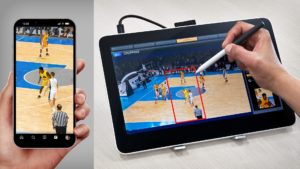
Then came the VB440. Long recognized as one of the most powerful production analysis tools available, the VB440 is a single, appliance-based probe capable of monitoring uncompressed video, audio, and ancillary data across IP and SDI workflows, accessible to multiple remote users in real time via a simple web browser. It changes the logistics associated with live production by eliminating racks of dedicated equipment, multiple screens, and complex cabling – while providing vectorscopes, waveforms, metrics, room meters, and more.
In many ways, the VB440 acts as a democratizing force: it delivers best-in-class production tools to operations of all sizes, meeting the needs of both Tier One providers and smaller, resource-limited teams, giving both access to levels of insight and control that previously belonged only to the biggest names in broadcast.
However, because of the sheer breadth of its capabilities, the VB440 had to be delivered as a dedicated appliance, with performance defined by its internal hardware. We recognized though that to match the flexibility found across our broader probe range – and to meet the ever-shifting scalability demands of modern, agile production – this model would eventually need to evolve.
Contain yourself

And that’s exactly what we have achieved with our new containerization approach (which, it’s worth noting, was winner of the TVTech Best of Show award at IBC 2025). We have ‘containerized’ the VB440, so key toolsets exist independently, scale independently, and can be deployed independently by users. By modularizing its extensive capabilities, we’ve made deployment far more flexible and scalable than ever before.
This is where hybrid thinking comes in. This isn’t purely a Cloud solution – it builds on the presence of an existing VB440 in any setup. But it’s also much more than an appliance. By combining remote servers and local infrastructure, we give users more of what they need, when they need it.
Of course, it has always been true that the VB440 has been accessible through the internet, from anywhere in the world, using any HTML5 browser. But previously, that simply connected you to the power of the underlying appliance: providing fixed limits in terms of user numbers and capacity (though eight users and dual 200 Gigabit Ethernet connectivity was nothing to be sniffed at). Now, with cloud capability and containerization, you can also access the capacity and additional processing power offered by remotely located data centers.
For smaller production houses, the implications are huge. They can maintain a lean, appliance-based setup that covers everyday operations – confident that they have the same deep diagnostic and visualisation tools that big broadcasters use. Then, when they land a major sports contract or cover an international feed, they can temporarily “spin up” additional functions. Maybe they need to monitor more cameras. Maybe they want to boost the number of simultaneous users accessing HDR waveform or immersive audio monitoring. Containerization means they can do so instantly, without a permanent hardware upgrade or a sudden leap in operational costs.
In short: expand when you need to, pay for what you use, and don’t let infrastructure dictate creativity. Because, crucially, flexibility isn’t just a matter of convenience; it’s a matter of creative freedom. When production specialists aren’t constrained by infrastructure, they can focus on the part that really matters: making pictures, making sound, and making it all work beautifully together.
The same principle scales in the opposite direction too. Tier One broadcasters – the ones who live and breathe complex, multi-site productions – often face the opposite problem: they’re required to build infrastructure that’s robust enough to handle global events but then sits partially idle for the rest of the year. Containerization offers a solution to that inefficiency. By isolating and scaling specific VB440 functions on demand, major broadcasters can handle the chaos of large-scale events – hundreds of camera feeds, dozens of engineers, multiple concurrent users – without maintaining a permanently inflated system. In essence, they can scale dynamically. The result is both operational efficiency and financial sanity.
And that’s really what this evolution represents: sanity in an industry that sometimes veers towards the extreme. There’s no need to throw everything into the Cloud, nor to cling to the rack room as if it were sacred ground. Containerization bridges those worlds, offering a pragmatic balance that lets us use both with intelligence and intent.