IBC 2025 – Shaping the Future

We spoke to Mike Crimp, CEO of IBC, about expectations and themes for this year’s show in Amsterdam, and also how IABM members can maximize their returns from IBC.
Your theme for this year’s show is Shaping the Future – please explain the thinking behind this, and where you see the M&E industry heading over the coming years.
Shaping the Future is all about connection and innovation as our industry navigates a period of accelerated change with a clear sense of direction. Across media and entertainment, there’s a growing acknowledgement that the business models, technologies, and creative processes within the industry are being redefined. The media sector has rapidly expanded, comprising a wider, more diverse ecosystem including digital platforms, content creators, enterprise streamers, and sports organisations. As the scope of media widens, IBC brings all of the creative, technology and business communities together to drive debate, incubate innovation and enable business outcomes.
At the same time, the sector is grappling with critical questions around shifting market realities, transformative technologies like artificial intelligence, and workforce sustainability. The industry isn’t just evolving – it’s actively shaping its future. IBC2025 aims to energise that process by providing a platform for mission-critical insight, shared learning, and sector-wide collaboration.
Please expand on the Shaping the Future theme in terms of the IBC2025 conference schedule – what areas have you picked to concentrate on and why?
The IBC Conference has always aimed to reflect the most significant shifts affecting the media and entertainment industry. This year, under our three core themes of Shifting Business Models, Transformative Tech, and People & Purpose, the agenda addresses pivotal trends shaping the industry moving forward – from AI and human-machine collaboration to immersive experiences and personalised content.
As streaming to large, concurrent audiences becomes more commonplace and expectations around interactivity and quality continue to rise, expert speakers will cover business-critical challenges around technology and advertising models. AI also features heavily across the programme – not just in terms of its creative potential, but how it can drive efficiency, enhance personalisation, and support editorial workflows in real-world environments.
Across the three days, the conference will bring together a broad mix of industry leaders and trailblazers. We’re pleased to welcome speakers from organisations including ITV, YouTube, Sling TV, Warner Bros. Discovery, and NBCUniversal, among others. Topics on the agenda this year include: The business of TV and the search for sustainable growth across new platforms; Live sports and real-time experiences, with an emphasis on production tools and audience engagement; Personalised advertising and the future of commercial models,; and Discovery and prominence – how to ensure content is surfaced in a crowded landscape.
The programme will also once again spotlight IBC’s Technical Papers, which continue to celebrate world-renowned, peer-reviewed original research addressing real-world emerging challenges. From software-defined distribution to new approaches to low-latency streaming, the papers add critical technical insight to the broader discussions taking place.
Although it’s too early to talk about expected visitor numbers, I’ve noticed IBC is back to 14 halls, meaning that it is returning to pre-Covid scale. With so much competition from other shows, why do you think IBC has managed to not just retain, but grow its place in the exhibition calendar?
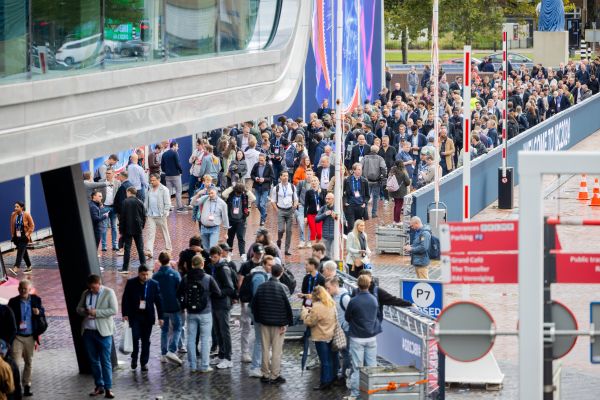
This year, we’re seeing strong momentum across all exhibitor segments, with nearly 44,000 square metres of space already booked across 14 halls. The exhibitor mix includes major returning players such as AWS, Avid, Adobe, Blackmagic Design, Ross Video, Sony, and Zixi.
The show has always operated as a business, technology and networking event. For many companies, it’s a moment to launch products, reset relationships, and gather market feedback. For others, it’s where strategic discussions happen – from mergers and acquisitions to product strategy or joint R&D. At the same time, our emphasis on networking and connection building means a wide range of attendees – from C-Suite to people starting out in the industry – value IBC as the must-attend event to mix with the people that matter, and find their next breakthrough opportunity. This level of experience is almost impossible to replicate in regional events or digital-only formats.
Crucially, IBC is in constant evolution – we’re always thinking about what’s next for our industry. That’s why we continue to expand our content programme, champion the Accelerator Programme, add new show features to address emerging technologies, or introduce new formats like the AV User Group speed pitch event to support sales across new verticals.
It’s clear that IBC has put a lot of thought into the way the show and visitor flow is structured. Can you dive into the logic behind this for us?
As the event has grown in scale, we’ve made a conscious effort to organise it in a way that helps visitors focus on the areas that matter most to them. Each hall is organised by specific product sectors. This smart layout makes it easier for attendees to navigate, compare offerings, and quickly find the technologies and solutions they’re looking for.
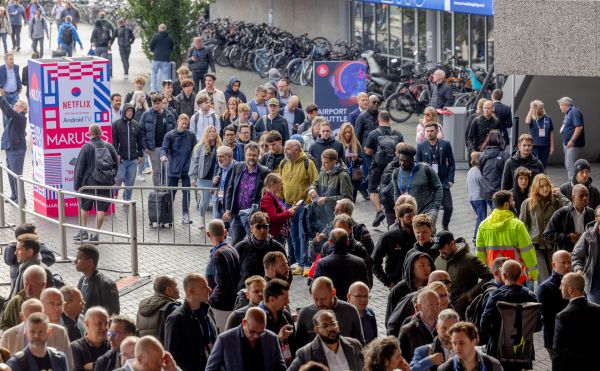
IBC Future Tech will transform Hall 14, showcasing breakthrough AI technologies, the Accelerator Zone, Talent Programme, IBC Hackfest x Google Cloud, and a range of other features – creating a single location that captures innovation from all angles.
This clustering approach is echoed elsewhere, with dedicated stages and content blocks around core themes – like the Content Everywhere stages, for example. We’ve also ensured that networking spaces are embedded across the halls, allowing for informal conversations and impromptu meetings around the most topical subjects.
The new Future Tech area in Hall 14 looks like a must-visit destination at the show – especially given the overall theme you have chosen this year. Can you give us some hints of what we might be seeing in it?
From AI and immersive experiences to virtual production and sustainable workflows, Future Tech is where you’ll discover what’s next – and connect with the people making it happen. Exhibitors will include large technology vendors such as Google, AWS, Microsoft, and Tata Communications, alongside a host of breakthrough start-ups.
In the Accelerator Zone, visitors will find nine collaborative Proof of Concept projects covering everything from generative AI content frameworks to ultra-low latency streaming and content provenance via C2PA watermarking. These projects are being developed by leading industry names including the BBC, RAI, ITV, Comcast, Globo and Associated Press, with hands-on demonstrations scheduled throughout the show.
Elsewhere in Hall 14, there’s a journey into the past with an installation celebrating a century of television innovation, showcasing iconic hardware and creative milestones the industry has seen – while also providing a glimpse into what the next 100 years might bring. The all new Google AI Penalty Shootout will showcase how AI is being used for real-time decision-making, coaching, and athletic performance analysis. The IBC Hackfest x Google Cloud will bring over 250 digital innovators, tech entrepreneurs, software developers, creatives and engineers to compete in a two-day hackathon to solve real-world M&E challenges using Google Cloud, Gemini AI, and other powerful tech tools.
The IBC Accelerator programme has been a huge success. What has it got for us this year?
The programme continues to demonstrate the value of collaborative innovation and R&D acceleration across the media ecosystem. For 2025, we’re showcasing nine projects that address some of the most pressing challenges in live production, low latency streaming, control room automation and sustainability.
Among them is an AI assistant agent project designed for live newsroom environments – being developed by teams from the BBC, ITN, Google and Cuez. Another project, Private 5G from Land to Sea to Sky, explores mobile production in remote and complex locations, supported by partners such as OBS and the University of Strathclyde. These are not just speculative projects – they are outcome-driven, laser focused initiatives that are set to unlock real-world game changers for media organizations, today and in the long run.
The Accelerator stage in Hall 14 will host presentations and proof of concept demonstrations from each team. It’s a fantastic opportunity for attendees to understand where leading-edge innovation is making a real difference — I’d encourage every visitor to find the time to experience the demonstrations first-hand.
With the IBC Awards deadline approaching, can you give us any insights into what we might be seeing at the ceremony in September?
The IBC Innovation Awards remain a highlight of the show, and this year’s entries reflect the breadth of innovation across media technology and content creation. Five categories are open for 2025: Content Creation, Content Distribution, Content Everywhere, Social Impact, and Environment & Sustainability.
The jury includes representatives from Variety, TVBEurope, Film & TV Video, SVG Europe and others – ensuring wide-ranging perspectives on what real innovation looks like in today’s climate. These awards put a spotlight on the industry pioneers that are reshaping media through technological and social progress. Expect stand-out projects ranging from the biggest live sports events, game-changing audience experiences, to social and environmental breakthroughs. The winners will be announced on Sunday 14 September at the RAI.
How is IBC approaching talent, education and skills development in 2025?
The IBC Talent Programme returns this year with a focus on skills, mentorship, and inclusive recruitment. Scheduled for Friday 12 September, the programme includes a series of sessions developed in partnership with Rise, GalsNGear, SMPTE and Women in Streaming Media. We’re also once again hosting the World Skills Café from the Global Media & Entertainment Talent Manifesto – which will explore sector-wide responses to skills gaps and training challenges.
With production workflows and creative pipelines shifting rapidly, there’s a clear need for the industry to invest in new competencies – whether in data handling, cloud orchestration or ethical AI deployment. The Talent Programme provides a forum for that conversation to happen in a collaborative and forward-looking way.
What advice would you give to IABM members exhibiting at IBC2025 to make the very most of their investment and time in the show?
The most effective exhibitors see IBC not as a standalone event, but as a campaign. That means building awareness ahead of the show through editorial and digital channels, showcasing your new products and trusted expertise, and using the event itself to launch, listen and connect. Whether by speaking on one of the showfloor stages, putting your initiatives forward in the Innovation Awards, or taking part in a range of new features, there are so many opportunities to stand out from your competitors.
We’d also encourage companies to think broadly about who they might meet at IBC. With more enterprise AV buyers attending, and crossover between media and adjacent industries growing, there are opportunities to connect with new markets, partners and customers that might not be immediately obvious. Exhibitors can also get involved in IBC Connect to forge strategic, high-value connections that directly support business growth.
Broadcast-quality technology is increasingly being adopted in the Pro AV sector. How is IBC working to support the emerging Broadcast AV market?
We’ve seen significant growth in enterprise use of video – from internal town halls and product launches to immersive training and experiential marketing. This has created demand for higher-quality, broadcast-standard workflows in the AV space, and we’re seeing increasing crossover in technology choices, procurement teams and service providers.
In response, the AV Speed Pitch event in partnership with the AV User Group will be returning. This brings together around 40 enterprise AV buyers from companies such as Barclays, AstraZeneca, Arup and WPP, offering IBC exhibitors the opportunity to showcase their solutions directly to decision-makers. Alongside that, the show floor will include AV integrators and vendors whose products span both traditional broadcast and modern enterprise use cases.
IABM sees our partnership with IBC as a critical collaboration for our members. How can both IABM itself and all our members around the world work more closely with IBC – and vice versa – to help deliver maximum value for our members at this pivotal time for the whole industry?
Our relationship with IABM and the wider IBC Owner group is fundamental. IBC will continue to champion the work of industry bodies, associations and partner groups to fuel knowledge-sharing, networking and growth opportunities. Our free-to-attend IBC Owner & Partner Programme will deliver a wealth of sessions, covering a range of topics from the latest industry standards and strategies for business transformation, to defining future networks and building new sustainable broadcast infrastructures. I’d encourage all IABM members to maximize the opportunities enabled by IABM at IBC2025, whether through speaking sessions, research presentations or networking discussions. IBC is designed as a collaborative platform to showcase the latest vendor innovations, unlock new leads, and help companies do business. We look forward to catching up with many IABM members in Amsterdam, seeing your latest technology breakthroughs, and hearing your views on the challenges and opportunities shaping the industry’s future.