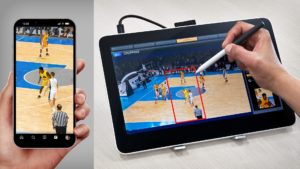
Mobii – Democratizing Premium Content Personalization: How Synthetic Intelligence Unlocks D2C Revenue Without Production Cost Barriers

Greg Schultz, CEO, Mobii Systems
The D2C Paradox
Sports organizations entering the direct-to-consumer streaming market face a fundamental economic paradox. Audiences accustomed to Netflix-level personalization expect tailored viewing experiences – following favorite players, accessing alternative camera angles, choosing commentary styles, and controlling their content journey. Yet these same organizations must deliver these experiences using broadcast-era production models where creating multiple personalized streams requires proportionally scaling production resources, crews, and infrastructure.
The mathematics are brutal: if producing one premium broadcast feed requires a certain investment in equipment, personnel, and expertise, creating ten personalized streams traditionally demands ten times those resources. For most sports properties, this economic reality makes personalization a luxury reserved for the largest organizations with the deepest pockets. The democratization of premium content personalization – making it accessible regardless of organizational size or existing infrastructure – represents one of the broadcast industry’s most pressing challenges.
The revenue opportunity being left on the table is substantial. Passionate fan segments willing to pay premium subscription fees for specialized content remain underserved. Sponsor activation opportunities through targeted streams go unrealized. The competitive differentiation that true personalization offers in an increasingly crowded D2C market stays out of reach for all but the most well-resourced organizations.
The Traditional Cost Barrier
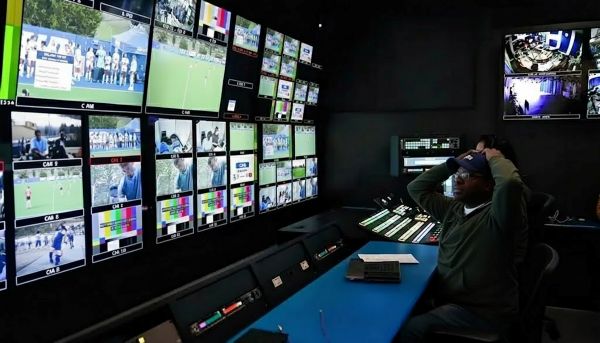
To understand why personalization has remained economically prohibitive, consider the traditional broadcast production model. Creating a single high-quality sports feed requires camera operators, video switchers, graphics operators, replay coordinators, audio engineers, and directors making split-second decisions throughout an event. Each personalized stream variation – whether following a specific player, offering tactical analysis, or providing alternative commentary – historically required duplicating significant portions of this human infrastructure.
This linear cost scaling creates an insurmountable barrier for most organizations. While the flagship broadcast feed justifies the investment, each additional personalized stream struggles to generate sufficient incremental revenue to cover its proportional production costs. The result? Sports properties default to the one-size-fits-all broadcast paradigm, leaving niche audiences underserved and missing opportunities to convert casual viewers into passionate, paying subscribers through targeted experiences.
The democratization challenge extends beyond pure economics. Organizations lacking traditional broadcast infrastructure – emerging leagues, smaller federations, regional sports properties – find themselves doubly disadvantaged. They lack both the resources to create personalized content and the existing production frameworks to build upon. Yet these organizations often have highly engaged niche audiences who would enthusiastically embrace personalized viewing options if economically feasible to deliver.
The Dynamic Cloud Mixer: Democratization Through Intelligent Automation
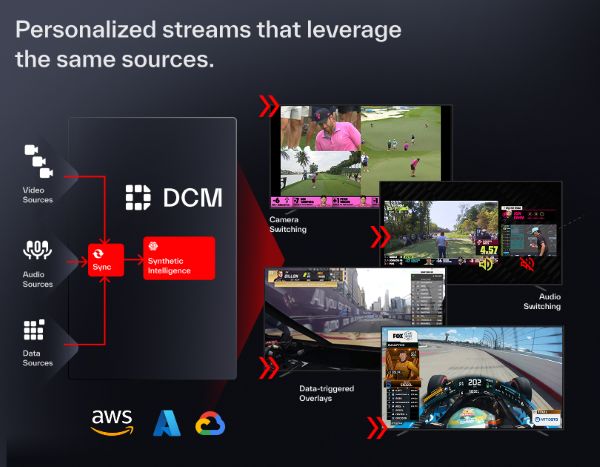
The breakthrough enabling personalized content democratization is Mobii’s Dynamic Cloud Mixer (DCM), powered by Synthetic Intelligence – a production automation approach that occupies the strategic middle ground between manual operation and unpredictable generative AI. Unlike generative AI which creates new content with potential variations in quality and accuracy, DCM’s Synthetic Intelligence synthesizes existing inputs (video, audio, data) based on predetermined rules enhanced by real-time data analysis.
This distinction proves crucial for broadcast applications where consistency and reliability are non-negotiable. DCM makes production decisions with the predictability required for live sports while leveraging data to identify and emphasize the most compelling aspects of content across multiple simultaneous outputs. The economic transformation is profound: creating multiple personalized streams from the same source content without proportional increases in production costs.
The technical foundation of DCM starts with frame-accurate synchronization of diverse inputs – multiple camera feeds, various audio sources (ambient sound, commentary, team communications), and real-time data streams from sports APIs. This synchronized media ecosystem enables data-driven production decisions. When a specific player makes a significant play, DCM understands which cameras captured it, which audio sources provide relevant context, and which graphics should be displayed – all without human intervention.
The platform’s Synthetic Intelligence layer analyzes synchronized data to drive automated content curation decisions. This layer applies predefined rules enhanced by data patterns to make production choices that would traditionally require human operators. From automated camera switching based on event location and player involvement to dynamic graphic insertion triggered by specific data conditions, DCM handles the technical execution while maintaining broadcast quality standards.
Deployed as a cloud-agnostic solution, DCM democratizes access by working within any major cloud environment (AWS, Azure, Google Cloud) or on-premises infrastructure based on customer preference. Rather than requiring massive upfront capital investment in proprietary systems, organizations can leverage existing cloud relationships and scale personalization efforts incrementally. The technology complements rather than replaces existing workflows, expanding possibilities without eliminating traditional broadcast roles.
Real-World Economic Impact: LIV Golf
LIV Golf’s implementation of Mobii’s Dynamic Cloud Mixer demonstrates the economic transformation that intelligent automation enables. The challenge was straightforward: deliver unprecedented viewing flexibility without the traditional production costs associated with multiple broadcast streams while meeting growing viewer expectations for personalized experiences.
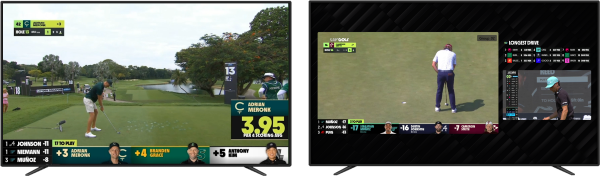
The DCM implementation ingests and synchronizes up to 36 direct camera feeds in the cloud, achieving frame-accurate synchronization with real-time golf data and audio. The platform’s Synthetic Intelligence layer then autonomously creates 18 Group Streams (enabling fans to follow specific players within each group) and 13 Team Streams (allowing fans to watch all players within a team multiview) – a total of 31 personalized streams plus the main world feed, all generated from the same source content.
DCM’s automation handles every aspect of production: switching between cameras as players move between holes, integrating real-time graphics for each personalized stream, making split-second production decisions based on live data, and delivering consistent broadcast-quality output without manual intervention. Each stream maintains the production values viewers expect from premium sports content while emphasizing different aspects of the event based on the intended audience.
The economic implications extend far beyond production cost savings. LIV Golf can now reach fan segments that would otherwise be underserved – passionate supporters of specific teams or players who previously had to accept the main broadcast’s editorial decisions about coverage allocation. The ability to offer genuine viewing choice creates tangible subscription value, differentiating LIV Golf’s D2C offering in a competitive streaming market. Perhaps most importantly, the infrastructure enables rapid experimentation with new content formats and personalization approaches without disrupting the core broadcast or requiring significant additional investment.
This implementation demonstrates how rights holders can rethink traditional broadcast models. Rather than personalized streams replacing or competing with the main broadcast, they enhance the overall fan experience and create new engagement opportunities. The future of sports broadcasting isn’t about creating one perfect feed – it’s about building an ecosystem of content that meets diverse viewer preferences while maintaining production quality and operational efficiency.
Industry-Wide Democratization
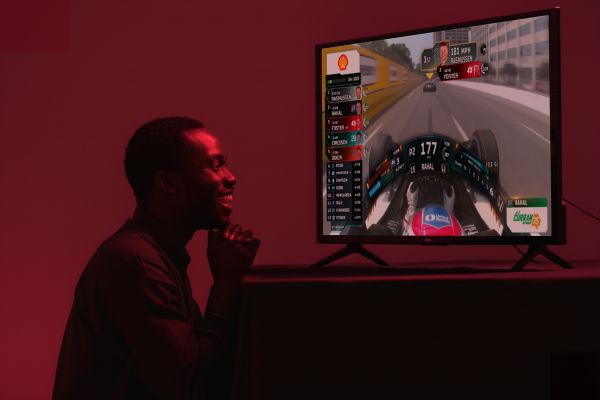
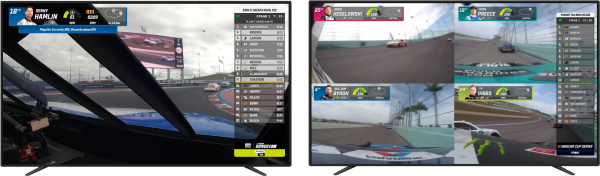
While golf provides a compelling case study, the democratization implications of DCM extend across the sports broadcasting landscape. Warner Bros. Discovery’s implementation of the Dynamic Cloud Mixer for NASCAR in-car driver feeds on the Max platform demonstrates the technology’s versatility. Processing up to 40 individual driver camera sources with synchronized telemetry data and automated audio ducking, DCM creates individual driver feeds and multiview composites that would be economically impossible using traditional production approaches.
The platform’s ability to ingest diverse inputs, synchronize them with frame-accurate precision, and generate multiple personalized outputs through Synthetic Intelligence creates opportunities for organizations of all sizes. Smaller leagues and federations can now access production capabilities previously reserved for major sports properties. Emerging sports can offer viewing experiences that compete with established properties. Regional sports networks can provide personalization that creates genuine value for local fan bases. The common thread? Making cutting-edge capabilities accessible regardless of organizational size or existing infrastructure investment.
This democratization also enables new business models. Organizations can experiment with tiered subscription levels based on personalization access, create sponsor activation opportunities through targeted streams, and develop content strategies that serve previously ignored audience segments. The economic risk of innovation drops dramatically when new content formats don’t require proportional production cost increases. DCM’s cloud-agnostic deployment means organizations can start with core event coverage and incrementally expand personalization options based on audience engagement data.
Beyond core video processing, DCM extends through a comprehensive Media Services pipeline that offers sub-second global distribution in industry-standard formats (DASH and HLS in CMAF), frame-accurate synchronization between different streams, and real-time interactive experiences. This end-to-end approach ensures that the personalized content DCM creates reaches audiences with the quality and latency standards that premium sports content demands.
The Path Forward
As 2026 approaches, the sports broadcasting industry stands at an inflection point. The question has shifted from “can we personalize content?” to “how do we monetize personalization effectively?” Early adopters of the Dynamic Cloud Mixer gain significant competitive advantages in the D2C marketplace. Organizations that democratize access to premium content capabilities position themselves to capture audience segments and revenue opportunities that competitors leave untapped.
The convergence between traditional sports broadcasting and streaming platform capabilities continues accelerating. Audiences expect the choice, control, and personalization they receive from entertainment streaming services. DCM provides the economic framework that makes meeting these expectations financially sustainable rather than prohibitively expensive. The platform’s Synthetic Intelligence delivers the consistency required for broadcast while the automation delivers the scalability required for personalization.
The democratization of innovation itself may prove the most significant impact. When cutting-edge production capabilities become accessible to organizations regardless of their traditional broadcast infrastructure or budget constraints, the entire industry benefits. Competition drives creativity, niche content finds its audience, and viewers gain the personalized experiences they increasingly demand. The Dynamic Cloud Mixer transforms personalization from a resource question into a strategy question – not “can we afford to personalize?” but rather “how do we best serve our audience segments?”
For sports organizations evaluating their D2C strategies, the economics of personalization have fundamentally changed. The production cost barriers that once made multi-stream personalization a luxury reserved for the wealthiest properties have fallen. The democratization of premium content personalization is no longer a future aspiration – it’s an available reality transforming how sports content reaches passionate audiences worldwide. The Dynamic Cloud Mixer, powered by Synthetic Intelligence, provides the foundation for this transformation.