Techex – Funding the Software Shift: Commercial Models That Match The Work
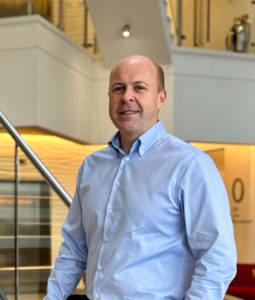
Scott Kewley, CEO, Techex
Broadcast infrastructure is being rebuilt while the lights stay on. IP and cloud are no longer experiments. The drivers are familiar — reliability, scale and cost — but the tempo has changed. Over the past fifteen years, viewing has shifted to streaming, social media and on-demand. Rights windows have tightened. Live events now create extreme but intermittent peaks. Cloud economics, meanwhile, have normalized elastic capacity. In that context, tying long depreciation cycles to fixed hardware is a poor fit.
At the same time, multinational media groups are seemingly constantly merging, splitting and re-bundling portfolios to align with direct-to-consumer, FAST and premium subscription models. Each corporate transaction triggers a seismic reconfiguration behind the scenes, with platforms being consolidated or carved out, traffic patterns shifting and estates being re-licensed, re-contracted and re-integrated. The result is constant change at significant scale, presenting both technical and commercial challenges.
Why Procurement Had to Change
Software-defined infrastructure has also changed how estates evolve. Instead of episodic, RFP-led refreshes, teams are adopting iterative deployment that mirrors software development: modular updates, sprint-based releases, continuous integration and automated testing. Techex advocates this continuous engagement model – the aim is to replace one-off projects with a standing collaboration in which capability is added, hardened or retired in place without disruptive cutovers.
Techex is a global specialist in live video transport for Tier 1 media organizations. It develops its own software and architects integrated best-of-breed systems for complex, mission-critical environments. Its North American customers include NBCUniversal and Fox, underscoring a focus on commercial flexibility, premium functionality and operational resilience.
The company’s platform, tx darwin, is a modular, IP-native system used for live sport, affiliate distribution and cloud-edge services. Built from more than sixty modules which gives it immense flexibility, it runs on bare metal, private infrastructure and public clouds. The design is API-first and event-driven: logic blocks can make decisions and control the workflow based on live data and metadata from anywhere in the workflow or from third parties such as TAG Video Systems and Bridge Technologies. Market-leading functions include seamless encoder failover, SCTE-35 generation and normalization, transport-stream clean-up and workflow blueprints. As part of a transmission chain, tx darwin enables uninterrupted encoder switching for cloud playout, cloud-production workflows for live sport, efficient and detailed SCTE-35 signaling for monetizing previously unmonetizable channels, among hundreds of other use cases. Critically, workflows are assembled from only the modules required, delivering technical and commercial efficiency without technical debt.
Flexible, Workload-Aligned Pricing
Procurement is starting to follow operations for many organizations: scale, flexibility and the rise of cloud are forcing commercial models to change as fundamentally as the technology they fund. Techex offers CapEx, OpEx and usage-based licensing so spend can follow workload and timeframe. CapEx suits long-lived, always-on assets such as primary distribution hubs and master control rooms where fixed costs and perpetual licences are preferred. OpEx supports teams iterating on IP workflows, building directly in the cloud or experimenting with new cloud services without long commitments. Usage-based licences fit short-term activations such as tournament coverage, trials or temporary channels. Most organizations blend these models. A global sports network might run core tx darwin capacity under CapEx in a central facility, expand via OpEx for regional roll-outs or testing, and enable event-specific modules on a usage basis – spinning them up for a tournament and retiring them afterwards. Pricing is presented predictably and transparently, helping finance and engineering teams plan multi-year transitions with a clear view of cost and scalability.
Techex aligns its engagement to this rhythm: engineers work daily with client teams, maintain a shared vision and deliver regular increments while providing a single point of support across Techex and third-party tooling. The commercial model tracks the cadence, so spend follows delivered value rather than procurement timetables. Focused on a defined set of competencies at the IP video layer and offering impartial integration advice, Techex sustains momentum across architecture, delivery and operations, turning estates into continuously evolving platforms rather than a string of one-off projects.
Close Partnerships, Delivery Model and Support
One way in which Techex stands out is in support. The specialist support team and technical team work alongside client teams throughout design, deployment and live operations. Engineers co-develop workflows and ensure integration into wider estates, and Techex provides a single point of support for its own technology and connected third-party tools.
This kind of hands-on approach makes a significant difference. For instance, broadcasters benefit from faster deployment, better reliability and a more joined-up engineering experience. There’s no disconnect between commercial strategy and technical delivery because both are shaped around the customer’s actual infrastructure and organizational structure, not a product sales model.
As software-defined operations continue to expand, Techex’s approach pairs modular technology with deep systems integration and flexible commercial terms – supporting a faster pace of change and turning continuous transformation into an operational advantage.