Tiledmedia – A Look towards Sports Streaming in 2030
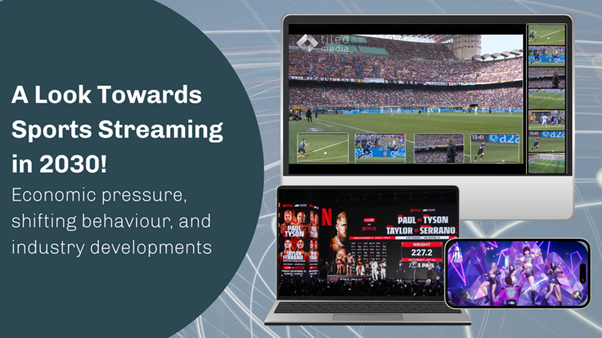
Our industry is in choppy waters, as we have seen job cuts in streaming and the wider media world over the last couple of years. While streaming is increasingly picked over linear broadcast, the pressure on sports streaming services mounts as they wrestle with consumer churn, large-scale piracy, and streaming ad revenue not fully replacing linear broadcast ad revenue. Add an unstable geopolitical situation and fears of a recession to this mix, and it is safe to say that streaming services worldwide face a precarious situation. This article aims to identify key factors and trends, and to explain some of the dilemmas that sports platforms both large and small are dealing with. Special attention will be given to the role of AI within streaming services and the push for more personalization on the consumer side.
Picking the Right Lane
Sports remain appealing for streaming services in terms of engaging a core base of fans, which means leagues still expect broadcasters and streamers to increase the price of acquiring the content rights every cycle. A noteworthy point is that when sports games are available on both broadcast and streaming, broadcast audiences still outnumber streaming viewers, it will be interesting to see how this ratio will develop further. Only a few companies can afford the top tier sports franchises like NFL, Premier League and NBA. These premium formats are well-established brands, and both traditional broadcasters and tech giants are vying to obtain these rights. Still, there are many other sports franchises that have a smaller audience, less global reach and fewer channels for monetization, that need to make a different calculation.
Some sports rights holders go direct-to-consumer (D2C), examples include Ligue1, F1, and ATP. The reasons for going D2C vary: Giving leagues more control, increasing fan engagement, understanding consumer behavior through data ownership, and cutting out (the cost of) the middleman. D2C works differently than third-party broadcasting and streaming arrangements because it doesn’t adhere to the fixed 4/5-year rights negotiations cycle. In addition, the cost of setting up a D2C channel has come down significantly, mainly due to a more modular arrangement of components that form a live streaming system.
Other (E-)sports leagues and competitions make use of the vast reach of non-traditional (social) media giants like YouTube, Twitch as well as Douyin (TikTok) and Kuaishou in China. These examples have covered major events streamed for free, such as the Football World Cup in Brazil and China, Bundesliga on YouTube in the UK, and the E-Sports World Cup on Twitch.
Tough Times Force Tough Choices
We see a very intense competition with tight margins, expensive content rights and demanding consumers. Platforms basically have three dials that they can turn: revenue (total & ARPU), operational costs (TCO), and content rights. Now more than ever, streaming platforms are trying to do more with less. Reducing operational cost has been a major issue that platforms are trying to manage through lay-offs, automation and application of AI throughout the end-to-end chain.

Regarding AI, perhaps its most used application by video streaming platforms so far has been for content recommendation, which can be considered low-hanging fruit. We also see AI being applied to track down pirated live streams and flag them so that they are taken down quicker.
Turning to ads, ad production costs and inflation have outpaced ad revenue (CPM) growth for almost a decade now. It is no wonder that streaming services have started using AI for ad insertion, it helps with Server-Side Ad Insertion (SSAI), and increasingly Server-Guided Ad Insertion (SGAI). However, even if you have the best AI tooling to optimize the ad content for specific audiences, inserting effective, seamless and unobtrusive ads also depends on other components in the chain, like the client-side video player. In our view, the ad insertion method that will dominate sports streaming in the future will be server-guided overlay ads, that can optimally and dynamically factor in viewer preferences, content type, real-time events, portals to marketplaces and more.
Simultaneously, sports streaming platforms aim to increase personalization, interactivity and storytelling for its viewers. Features like multiview, shoppable, and versioning are essential in realizing this goal. These innovations can help platforms reduce churn and increase stickiness. The key here is to build a lasting relationship with viewers and cater to modern viewing behaviors. From our perspective as a software vendor here at Tiledmedia, we aim to accommodate this trend, by offering a Video Player built from scratch. We think this enables unbeatable playback QoE, unmatched Multiview and unique overlay ads; key factors for sports streaming services to build a platform that can weather the storm in the industry.
Scrubbing Forward in Time
With all this in mind, where does that leave the industry 5 years from now? Obviously, AI is the most eye-catching, but it’s important to note that streaming services explicitly see AI as a tool and not as a goal.
For a look in the future we can see what Netflix – a relative newcomer to the sports streaming vertical – is saying: The focus now is on applying AI to previsualization, shot planning, VFX, and post-production. Netflix has also announced innovations like gaming on TV, interactive merchandise and experiences, and physical events.
Gaming platforms like Roblox are expanding in the other direction, working with sports leagues to monetize and enrich their virtual world with franchises that people want to follow like NFL and FIFA. And we also see examples of virtual music concerts with massive audiences that are streamed on Fortnite, PUBG and other platforms. One can safely assume that sports leagues are also looking at these gaming platforms to target younger audiences through live streams of sports games.
The sports streaming industry is trying to merge digital content with real-life experiences. The hurdles for consumers to access a marketplace for sports related shopping during live sports streams are increasingly fading away, and this trend will only continue.
As sports streaming is becoming the go-to channel for consuming sports content, this decade will be defined by a rocky road towards a new equilibrium. We at Tiledmedia are eager to help the industry move forward, supporting platforms to provide a robust, personalized, and intuitive streaming experience that can drive monetization in this new era. Sports fans are still as passionate about their teams as ever, all we need to do is adapt to their evolving behavior.