TVU Networks – Cloud and the New Economics of Live Media

Rafael Castillo, VP/GM EMEA and Latina America, TVU Networks
Cloud production is transforming media economics — broadening who can create, compete, and profit from content. In a fragmented, platform-centric market, success depends less on infrastructure ownership and more on the ability to move fast, reach audiences everywhere, and monetize every moment.
Democratization: Who Gets to Create Content Is Changing
For the first time in media history, high-quality live production has become financially accessible. Things that once required fleets of satellite trucks, extensive links, large crews, and big budgets can now be done through cloud-based, virtualized workflows, aggregated connectivity and remote operations. The result is economic: the lower the cost to produce, the higher the volume of content that becomes commercially viable.
- More creators entering media
- More content to monetize
- More audience segments served
Cloud unlocks direct-to-consumer business models, enabling rights-holders and brands to launch their own streaming channels and keep revenue relationships in-house. Democratization doesn’t lower quality: it broadens opportunity.
Convergence: Who Competes for Audiences is Changing
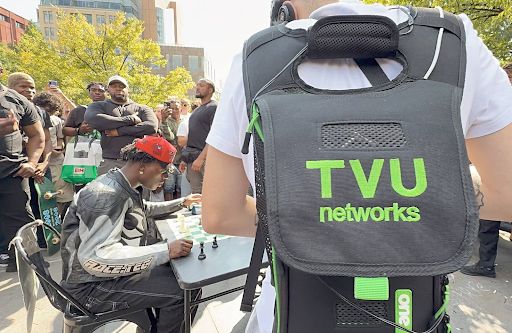
Today’s competition for attention is not limited to broadcasters alone. It’s broadcasters versus streamers, rights-holders, brands, and anyone with a live audience. Distribution has shifted from traditional channels to platforms and communities, and revenue has shifted accordingly. Streamers have become some of the most watched live personalities worldwide. TVU supports leading US creators like IShowSpeed and Kai Cenat, whose productions now rival live television in both scale and technical complexity.
A powerful signal of the shift:
IShowSpeed’s 35-day, 24/7 cross-country livestream transforms a tour bus into a mobile broadcast studio. Live switching, synchronized multi-camera workflows, and cloud collaboration continue seamlessly — from stadiums to streets to highways. This demonstrates how much creator-driven production has advanced: combining professional reliability with interactive viewer experiences. This is no longer just a broadcast industry. It’s a live audience industry — and the playing field is wide open.
Enterprise AV — Where Growth and New Revenue are Emerging
MediaTech is rapidly expanding into parallel sectors where live content enables mission-critical communication and monetizable engagement:
- Corporate town halls and investor communications
- Live education and training experience
- Medical demonstrations and telehealth
- Hospitality and retail brand activation
- Smart city and emergency communications
Many of these organizations have live audiences without a broadcast unit. Cloud solutions allow them to adopt professional production standards, serving employees, customers, stakeholders, and citizens with real-time, high-value content.
This has opened a significant new revenue channel for production companies and system integrators who now serve both media and enterprise markets.
Monetization: Where Value is Captured is Changing
Audiences no longer gather in one place — and revenue no longer comes from one stream.
Advertising, subscriptions, sponsorships, rights licensing, and data monetization now coexist across dozens of distribution channels.
For content owners, this means a single live event can generate value:
- on linear broadcast
- on direct-to-consumer streaming platforms
- in highlight-driven social engagement
- in FAST channels with dynamic ad insertion
- through long-tail replay, clip licensing, and archive monetization
Cloud-native workflows shorten the distance between creation and consumption, enabling rights-holders to publish to multiple outlets simultaneously and optimize yield per platform.
AI further enhances this value chain by identifying key moments inside the content — helping media organizations extract more revenue from every second they produce:
- faster highlight turnaround
- new sponsorship inventory
- metadata-driven rights packaging
Monetization has become a real-time discipline — measured in seconds, not weeks.
Sustainability: How You Produce Determines What You Can Win
Sustainability has shifted from being a ‘best practice” to a mandatory part of procurement. Rights-owners now expect, and increasingly require, green production models. Traditional live workflows have a substantial carbon footprint: vehicle fleets, cabling, generators, and flown crews.
Cloud-powered production reduces that footprint dramatically:
- Smaller teams on site
- Fewer vehicles and less power
- Far more remote control-room execution
The results are measurable and meaningful:
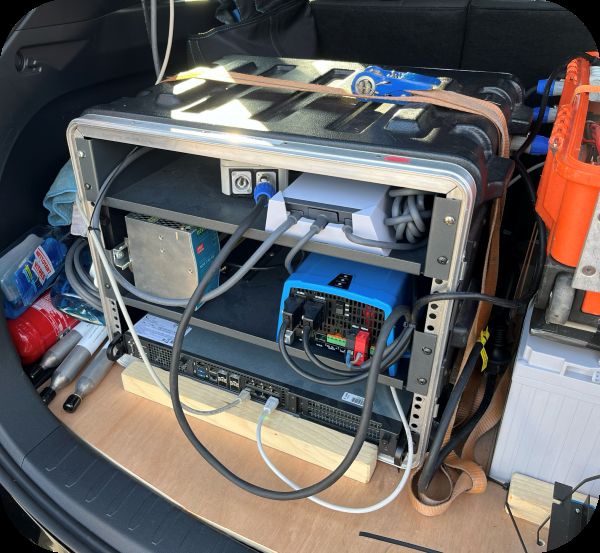
France Télévisions reduced transmission costs by 92% and prevented over 600 tons of CO₂ emissions during the 2024 Olympic Torch Relay by using TVU’s cloud-native remote workflows. Sustainability has now become a key factor that directly affects who wins future contracts.
Leadership: Who Shapes The Future Is Changing
Power used to belong to those who owned the most hardware. Tomorrow’s leaders will be those who:
- reach audiences directly
- monetize every moment
- operate globally with flexible scale
- build responsibly and sustainably
- Innovate faster than legacy infrastructure can move
This is a more inclusive, profitable, and resilient industry.
Conclusion
Cloud production isn’t just a technical update — it’s a core business shift that:
- Broadens who can create
- Changes who competes for attention
- Speeds up how value is generated
- Rewards responsible creators
- Enables new leaders to rise
TVU Networks is proud to support this change — helping every storyteller produce, distribute, and monetize live content efficiently, sustainably, and globally.
The future of media won’t be defined by who controls the most infrastructure — but by who unlocks the most opportunity.