
Uplynk – Beyond Broadcast: How MediaTech Is Powering the Next Era of Streaming
Most organizations don’t consider themselves broadcasters. However, they are increasingly behaving like them.
Whether it’s a retail brand live-streaming a product launch, a religious group managing multi-site video content, or a streaming platform juggling FAST channels and VOD libraries, the demands are familiar: manage live and on-demand content, react in real time, distribute across platforms, and deliver a reliable, polished viewing experience.
Behind the scenes, these organizations face growing complexity. Content now spans live inputs, regionalized streams, blackout restrictions, ad placements, syndication rules, and multi-format delivery. It’s no longer just about publishing video. It’s about orchestrating a real-time, multi-channel operation. In many ways, streaming has begun to resemble traditional broadcasting, although with significantly more flexibility and scalability.
The Limits of Legacy Infrastructure
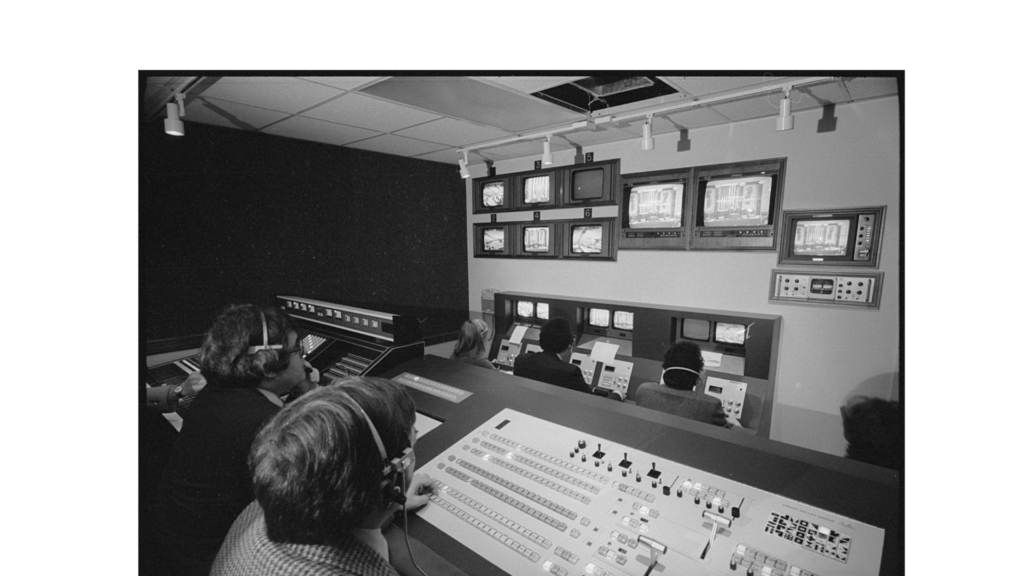
Broadcast isn’t going away, but the traditional model is no longer enough. The old control room full of hardware switchers, racks of routing gear, and teams of local operators was built for a different era. It served fixed schedules and centralized workflows well. But it wasn’t designed for today’s remote teams, dynamic programming, or the growing mix of live, linear, and on-demand content.
As streaming matures, the behind-the-scenes infrastructure needs to evolve. Distribution targets are fragmented. Teams are no longer in the same building or even on the same continent. And the speed of change has accelerated. A single workflow might require mixing multiple live inputs, applying regional rules, inserting midroll ads, and reacting instantly to news or delays.
The result is a growing operational burden, particularly for teams still tied to on-premises systems that weren’t designed for this level of flexibility or scale.
Enter the Virtual Control Room
The shift is already underway. Cloud-based platforms are now enabling virtual control rooms that replicate and, in many cases, improve upon the capabilities of traditional broadcast environments. Instead of managing complex and rigid hardware, teams can oversee live switching, schedule coordination, content prep, and stream publishing from a browser.
A virtual control room enables real-time reactions from anywhere in the world. Breaking news? Program delay? Schedule change? These can all be managed remotely, without requiring local operators to scramble or risking downtime.
Even more importantly, virtual control rooms support the mix of content types that today’s publishers rely on, including linear, live, and VOD, enabling seamless transitions and centralized oversight across all content. They support multiple formats, multiple outputs, and multiple business models. All without additional infrastructure. The Uplynk Streaming Platform is looking ahead to the future, helping content owners orchestrate these complex workflows with unmatched flexibility and scale.
Smarter Delivery with Audience Rules
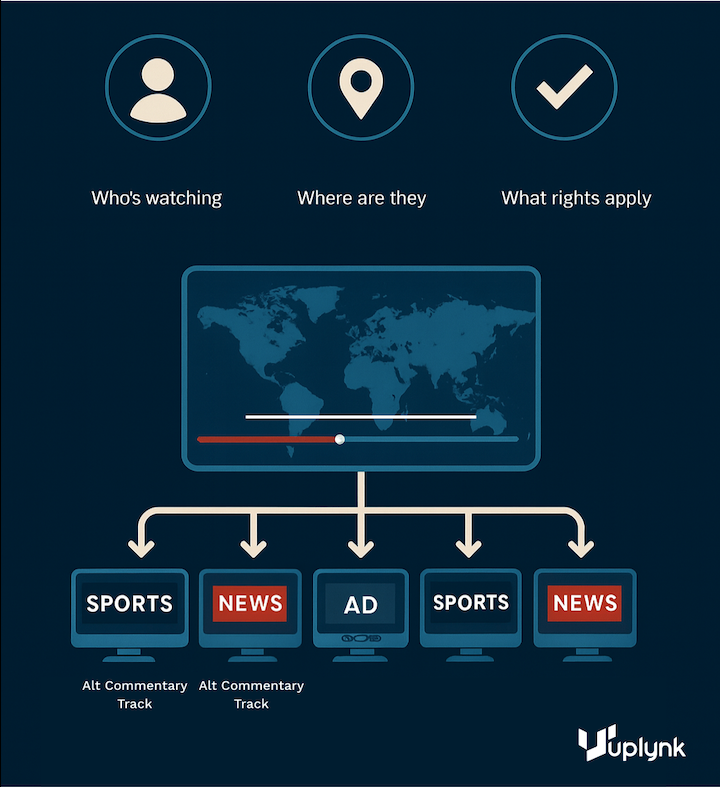
Imagine you’re watching a live sports event. Depending on where you are, you might see different ads, hear commentary in your preferred language, or even get different content. You don’t have to do anything the system figures it out for you. That’s audience rules at work.
Modern streaming isn’t just about getting content out. It’s about delivering the right version to the right audience at the right time. That’s where audience rules come in. Think of it as an intelligent delivery system. Instead of producing ten different versions of a stream for different regions or platforms, audience rules allow you to maintain a single master feed and apply dynamic logic. Who’s watching? Where are they located? What rights apply? The system automatically serves the correct version, whether that means a different ad load, alternative commentary track, or blackout enforcement.
It’s like a playlist that adjusts itself for every listener, utilizing a single feed that branches logically based on real-time rules. This approach simplifies operations while reducing encoding, storage, and delivery costs. That’s exactly the kind of flexibility the Uplynk Platform is built to provide.
From Media to Enterprise: The Broader Opportunity
These innovations originated in the media world, but their value is increasingly being recognized across other sectors. In Enterprise AV, for example, the same core needs are emerging:
- Live event management for all-hands meetings, product launches, or shareholder calls
- Secure delivery across internal and/or external platforms
- On-the-fly programming updates
- Personalized or regionalized streams for different business units or locations
MediaTech (Streaming) platforms like Uplynk are stepping into this space, offering proven tools to organizations that previously relied on basic webinar software or disjointed AV setups. What used to be “broadcast grade” is now enterprise-ready and often essential.
As MediaTech suppliers look for new areas of growth, Enterprise AV offers a natural extension. The content stakes are high, expectations are rising, and the complexity mirrors what’s already being solved in streaming.
Building What’s Next
At Uplynk, we’re building the infrastructure to support this new reality. We’re focused on making streaming workflows lighter, smarter, and more cost-effective, while still delivering the resilience broadcasters expect.
What sets us apart is the experience behind the platform. Our team includes broadcast veterans who’ve operated control rooms and engineers who understand how to scale that reliability in a cloud-native world. That combination helps us build solutions that not only work but also make sense operationally.
Because the future of content delivery isn’t about choosing between broadcast and streaming or choosing between media and enterprise. It’s about unifying the best of those worlds: precision control, flexible infrastructure, and intelligent delivery that adapts in real time. Broadcast may be changing, but its core principles are more relevant than ever. And they’re finding new life in unexpected places.


