Dalet – The Economic Shift: From Waterfall to Agile in 2026

Matteo De Martinis, Head of Product – AI & Media Production, Dalet
Looking back at 2025, one thing is clear: this was the year AI finally moved from experimentation to production in the media industry. At the beginning of the year, especially at the NAB Show in April, we still saw hesitation. Media technology buyers were curious but cautious, unsure whether AI would deliver real operational value. But very quickly after the show, that hesitancy faded. Broadcasters and content companies began requesting implementations, not just demonstrations. They tested AI capabilities and, most importantly, saw tangible benefits.
Transcription, translation, and other core AI-powered functions, once considered innovations, became table stakes. Once customers used them in real workflows, expectations shifted. As we step into 2026, the question is not whether AI belongs in media workflows, but where the industry goes next. The answer lies in two major shifts: first, a move towards autonomous, task-oriented AI components; second, a cultural embrace of agile, iterative approaches over traditional waterfall thinking.
Agentic AI as the Next Evolution of Workflow Design
Over the last year, it has become clear that generative and assistive AI, while transformative, were only the beginning. The real opportunity emerges when these systems evolve into agents: specialized, autonomous components that take action, collaborate, and help orchestrate complex processes.
At Dalet, this is exactly the direction we have been exploring with Dalia and our broader roadmap. Instead of designing a large AI platform that attempts to do everything, we are building a system of focused agents that mirror real media functions. For example:
- a Search Agent that navigates and extracts information from archives,
- an Editing Agent that assists in assembling sequences,
- an Ingest Agent that manages large volumes of incoming material,
- a Review Agent that helps with packaging and quality checks.
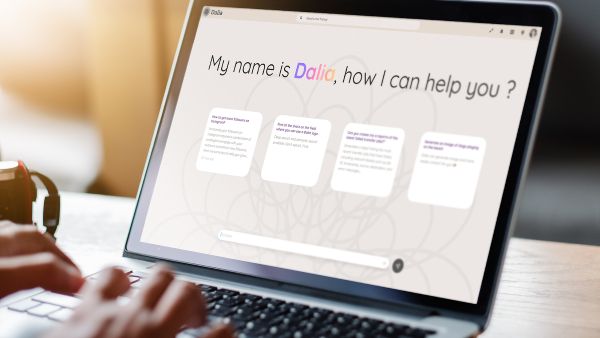
Each agent focuses on a specific task area, and together they shape a coordinated ecosystem that supports the entire media workflow. This reflects how teams actually operate: coordinated, yet specialized.
What makes this model powerful is that it reduces complexity, not adds to it. Integrations that once required heavy engineering can be mediated through agentic frameworks. Actions that once required deep product expertise can now be performed intuitively. Instead of making systems larger or more rigid, this approach makes them more accessible and simpler to use, even as capabilities expand.
Simplifying Deep Systems Without Losing Power
Stepping into the media technology industry, one of my first realizations was the paradox at its core: incredible capability often trapped inside legacy systems. These platforms can do almost anything, if you know how. But that very power has become a barrier. They were designed for control and customization, not simplicity, and as a result, only a select few truly master them. For newcomers, the learning curve can be daunting.
This is precisely where modern AI can help, not by replacing expertise, but by lowering the barrier to entry and making deeply engineered systems easier to navigate. When users no longer spend their time on repetitive, highly technical steps, they gain more time for creativity, editorial judgment, and meaningful decision-making. Reducing friction inside workflows is about amplifying the value teams can produce.
The Real Transformation Ahead: A Shift in Mindset
While technology is evolving rapidly, the biggest challenge the industry faces is cultural, not technical. Many media organizations, and especially technical teams, still operate using a waterfall mindset. Long RFP processes, multi-year projects, rigid requirements, and an expectation that a solution must be complete and perfect before deployment.
This mindset is rooted in the history of broadcast and media technology. In the 80s, 90s, and early 2000s, systems were rigid, expensive, and hard to change. Failure had real operational risk. But today, the environment is entirely different. AI and software capabilities now evolve in rapid, continuous cycles, far faster than the multi-year upgrade paths the industry grew up with. Customer needs shift quickly, and integrations that once took years now happen in weeks.
This is why the industry must accelerate its move toward agile thinking. That means:
- adopting technology in smaller, high-value steps,
- deploying quickly, rather than waiting for perfection,
- learning from early results,
- improving continuously instead of periodically.
Even achieving 20% of a desired outcome in a month is more valuable than waiting five years for a theoretically “complete” solution. This is where agentic AI and agile thinking come together. Agents allow for small, modular improvements, and agility allows organizations to extract value much faster.
Financial Pressure Will Push the Industry Forward
The economics of the media industry are heavily influencing technology decisions. With constrained revenues and thin margins, organizations have little room for error in their business models. They must simultaneously find new sources of efficiency and innovative paths to revenue.
Industry leaders have increasingly pointed out that the media sector moves too slowly, with long decision cycles that no longer align with technological reality. New leaders entering media organizations, especially those coming from the technology sector, expect rapid progress, iterative development, and user-friendly design. They’re used to consumer-grade tools that work intuitively and update continuously. They will expect the same from media technology and the organizations that deploy it.
This pressure means that investments must deliver long-term value while enabling short-term wins. More modular, flexible AI approaches fit this need because they do not require platform-wide overhauls or massive upfront investments.
Some regions and organizations are ready to adopt innovation aggressively, while others remain cautious. But the trend is unmistakable: the pace of change is accelerating, and the cost of inaction is rising.
2026: The Year AI Broadens Participation
Perhaps the most meaningful transformation AI will bring in 2026 is broader access. When complexity decreases, more people can contribute. Tasks that once belonged only to technical specialists become available to a wider range of team members. This democratizes technology, empowering diverse teams to collaborate and innovate in ways that were previously out of reach. It changes not only how teams work, but who gets to participate.
AI in media is not about reducing the human role, but about expanding it by removing barriers, enabling new voices, and giving professionals more time to focus on what they do best.
If 2025 was the year the industry embraced AI as a tool, 2026 will be the year it learns to work with it more collaboratively, more intuitively, adopting a mindset ready to evolve as quickly as the world around it.